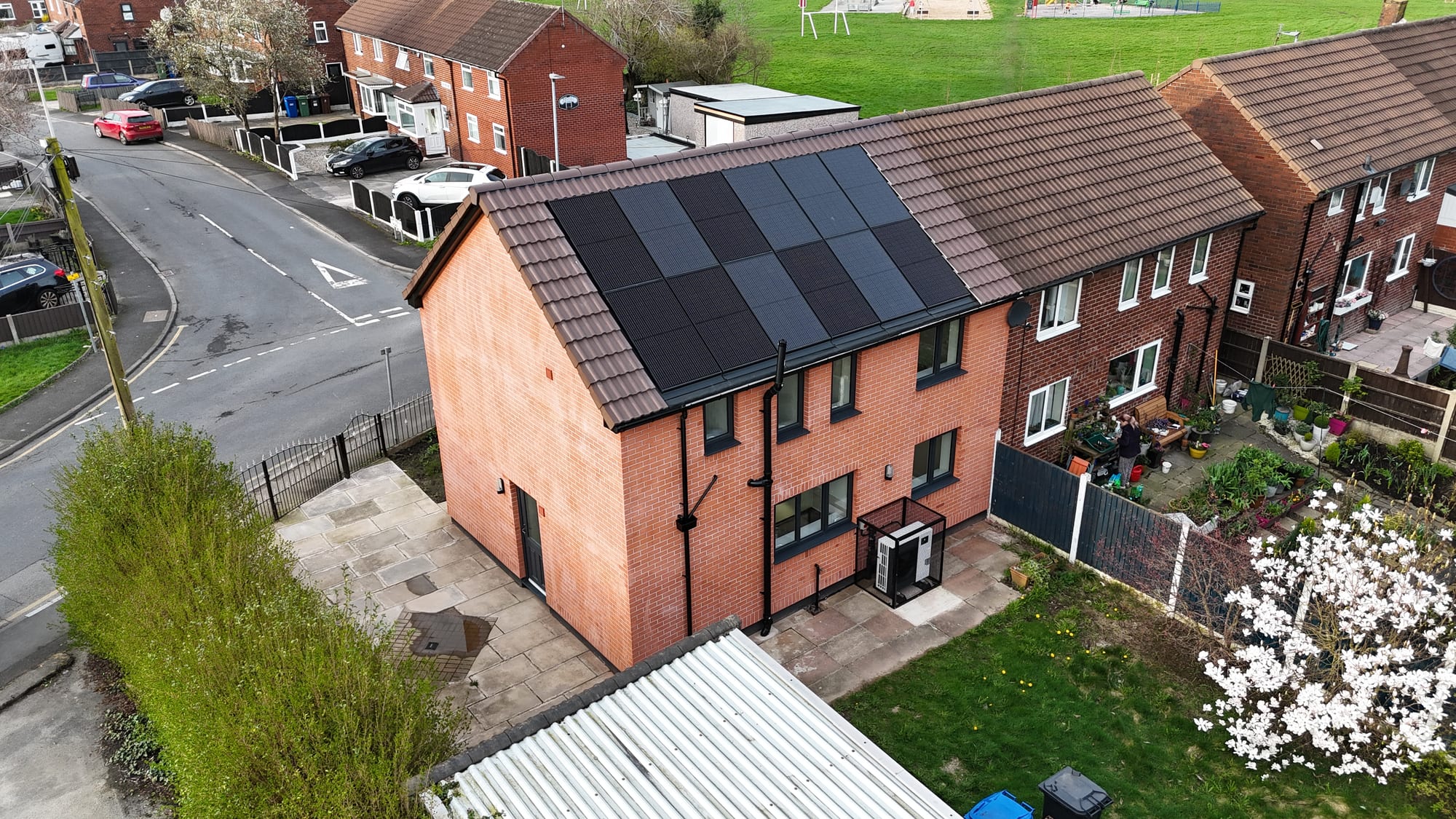
The material footprint.
ThermaSkirt is an aluminium emitter, and aluminium is one of the most recyclable materials in construction. This page presents the verified Environmental Product Declaration for the recycled aluminium it is made from, with its figures, boundary and recycling credit stated plainly.
What this data covers: the figures below are from the aluminium supplier's Environmental Product Declaration (Hydro Aluminium, Wrexham; EPD NEPD-5011-4267-EN), declared per 1 kg of aluminium ingot. This is a material-level declaration for the recycled aluminium, not a product-level EPD for a finished ThermaSkirt profile, which would add extrusion, powder coating and assembly. A product-level ThermaSkirt EPD is not yet published.
A recycled aluminium emitter, made in the UK.
The aluminium ThermaSkirt is extruded from comes from Hydro's recycling plant in North Wales. Because it is recycled rather than smelted from raw ore, its cradle-to-gate carbon is a fraction of primary aluminium's, and at the end of its life the aluminium can be recycled again with very little loss.
Every figure on this page is taken directly from the verified EPD, with its system boundary stated. Where a product-level figure for the finished profile is not yet available, that is said plainly rather than estimated.
- The aluminium ThermaSkirt is made from carries a verified Environmental Product Declaration (EPD NEPD-5011-4267-EN, Hydro Aluminium, Wrexham, to EN 15804+A2), independently checked and valid to 2028.
- Cradle-to-gate global warming potential is 5.10 kg CO₂e per kg of aluminium ingot, low for aluminium because the Wrexham plant is a recycling plant, not a primary smelter.
- The declared ingot contains 36% post-consumer recycled aluminium plus a further 32.5% process scrap; recycling aluminium uses about 5% of the energy of producing it from raw ore.
- At end of life, around 96% of construction aluminium is collected and about 93% recycled; the EPD reports a recycling credit of −4.88 kg CO₂e per kg (module D).
- ThermaSkirt replaces both the radiator and the skirting board in one aluminium component, and needs no screed, unlike underfloor heating.
- Important boundary: this EPD covers the aluminium ingot, not a finished ThermaSkirt profile. A product-level ThermaSkirt EPD (adding extrusion, coating and assembly) is not yet published.
What is the embodied carbon of the aluminium?
Global warming potential per 1 kg of aluminium ingot, by life-cycle module, from the EPD. The cradle-to-gate figure (A1–A3) is the headline; module D is the recycling benefit reported separately under EN 15804, beyond the system boundary.
| Life-cycle module | What it includes | GWP-total |
|---|---|---|
| A1–A3 Cradle to gate | Raw materials, transport, manufacture of the ingot | 5.10 kg CO₂e |
| A4 Transport to user | Wrexham to average customer, ~200 km by road | 0.02 kg CO₂e |
| C1–C4 End of life | Demolition, transport, processing, disposal | 0.28 kg CO₂e |
| D Recycling benefit | Credit for recovered aluminium substituting primary, beyond the system boundary | −4.88 kg CO₂e |
Per 1 kg of aluminium extrusion ingot. EPD NEPD-5011-4267-EN (Hydro Aluminium, Wrexham), to EN 15804+A2, externally verified, valid to 19.09.2028. GWP-fossil for A1–A3 is 4.91 kg CO₂e. Module D is a potential benefit beyond the system boundary, not netted into the cradle-to-gate figure.
Low-carbon aluminium, and recyclable again at end of life.
What is it made from, and where?
The declared ingot is a blend of recycled and primary aluminium from Hydro's Wrexham recycling plant in North Wales. ThermaSkirt is then extruded, coated and assembled in the UK.
Hydro also produces a higher-recycled CIRCAL 75R variant (75% post-consumer) under a separate EPD. The figures here are for the standard Wrexham direct-sales ingot. Confirm with our technical team which grade applies to a specific order.
What happens at end of life?
Aluminium is endlessly recyclable without loss of properties. The EPD models around 96% of construction aluminium being collected at end of life and about 93% recycled, with recycling using roughly 5% of the energy needed to make the metal from raw ore.
ThermaSkirt is a single-material aluminium emitter with no screed binding it in place, unlike underfloor heating, where plastic pipe is set into a cement screed. That makes the aluminium straightforward to recover and recycle. The EPD reports this future benefit as a recycling credit of −4.88 kg CO₂e per kg under module D.
One component instead of three
Beyond the aluminium's own footprint, ThermaSkirt removes material from the rest of the heating and finishing build-up. The saving depends on the baseline it replaces, so we set out the logic rather than a single headline figure.
For a project-specific whole-life comparison against a radiator or underfloor-heating baseline, our technical team can prepare a bill-of-materials assessment using the aluminium EPD figures above and your scheme's emitter schedule.
All carbon, recycled-content and end-of-life figures are from Environmental Product Declaration NEPD-5011-4267-EN, “Hydro Aluminium Extrusion Ingot, Wrexham Plant” (Hydro Aluminium AS), prepared to EN 15804+A2 and ISO 14025, externally verified and valid to 19.09.2028, declared per 1 kg of aluminium ingot. This is a material-level declaration for the recycled aluminium, not a product-level EPD for a finished ThermaSkirt profile. Last reviewed June 2026, maintained by DiscreteHeat Ltd.
Everything you need to know
Is this a ThermaSkirt product EPD?
What is the embodied carbon of the aluminium?
How much of it is recycled?
How recyclable is ThermaSkirt at end of life?
Why does recycled aluminium have such a low footprint?
Does ThermaSkirt help with whole-life and embodied-carbon targets?
Explore related Technical Data
The operational-carbon side, the product specifications, and how low-flow performance feeds the model.

Need embodied-carbon data for a submission?
Our technical team can supply the aluminium EPD and a project-specific material comparison to support your sustainability statement or whole-life carbon assessment.