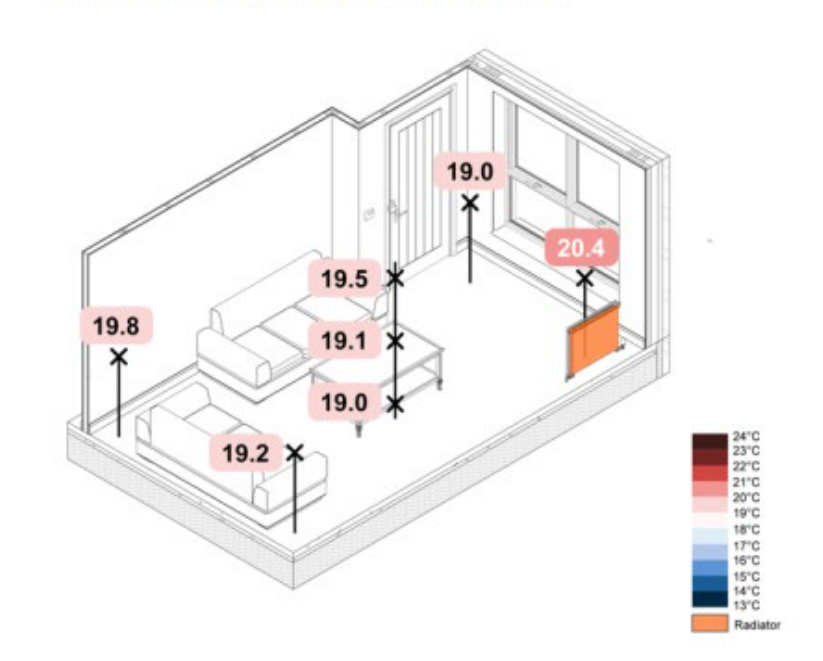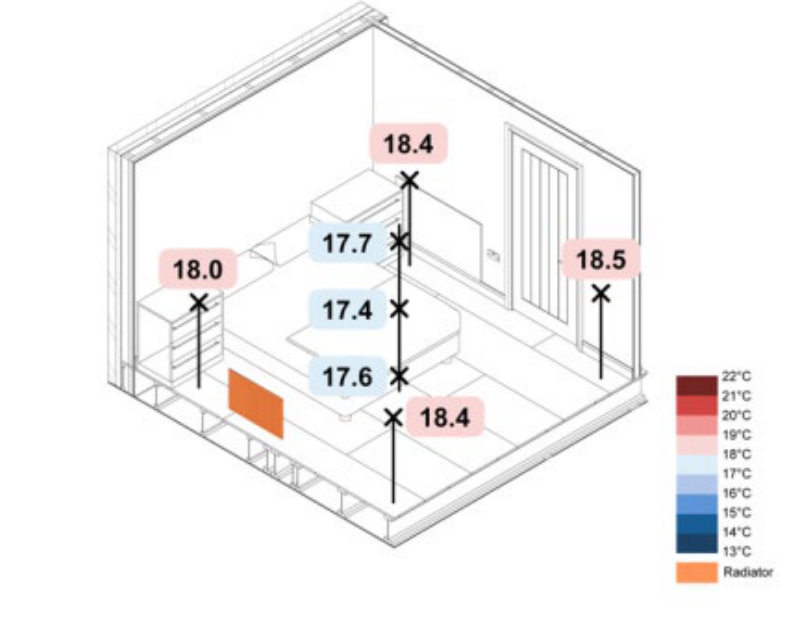
Radiators only
CoP 1.7 · SEEI 0.62 · 34.4 kWh · £8.43 / 24h
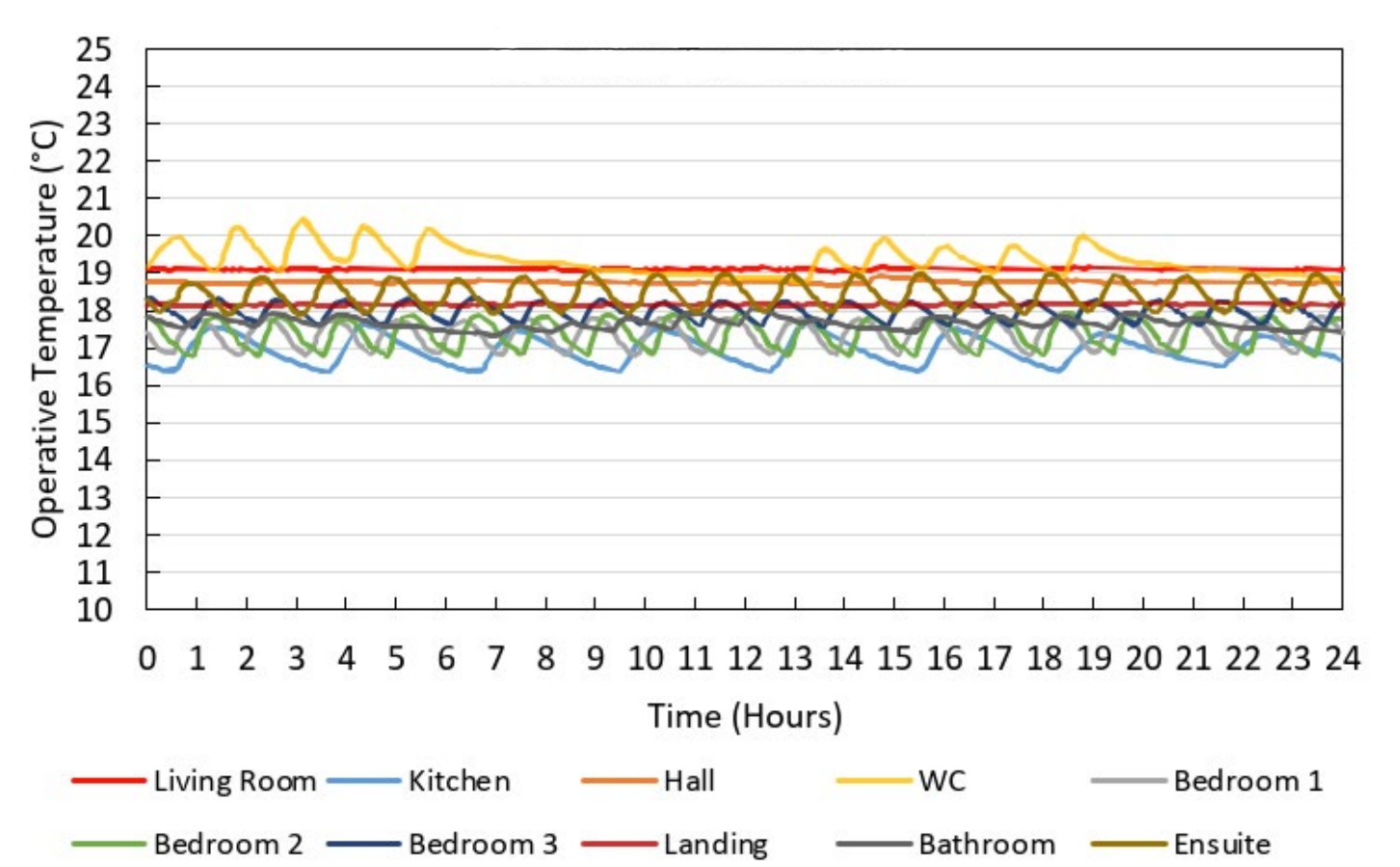
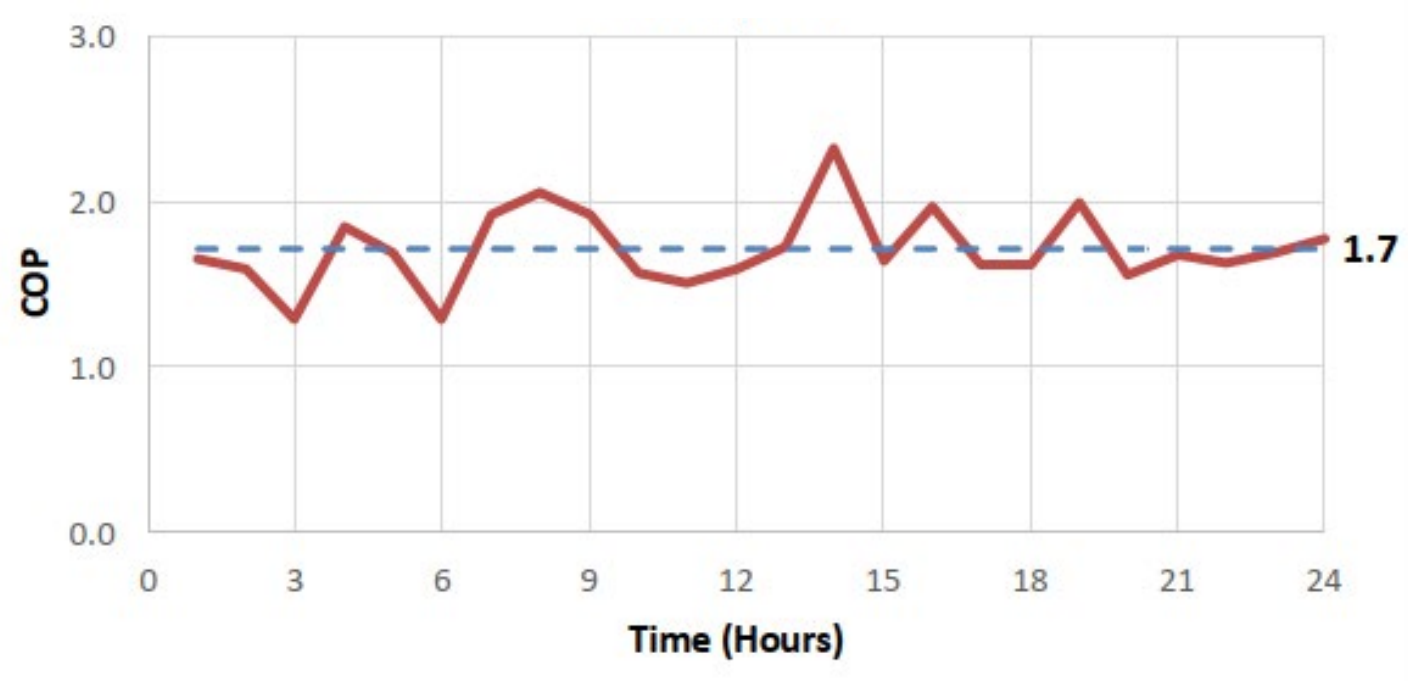


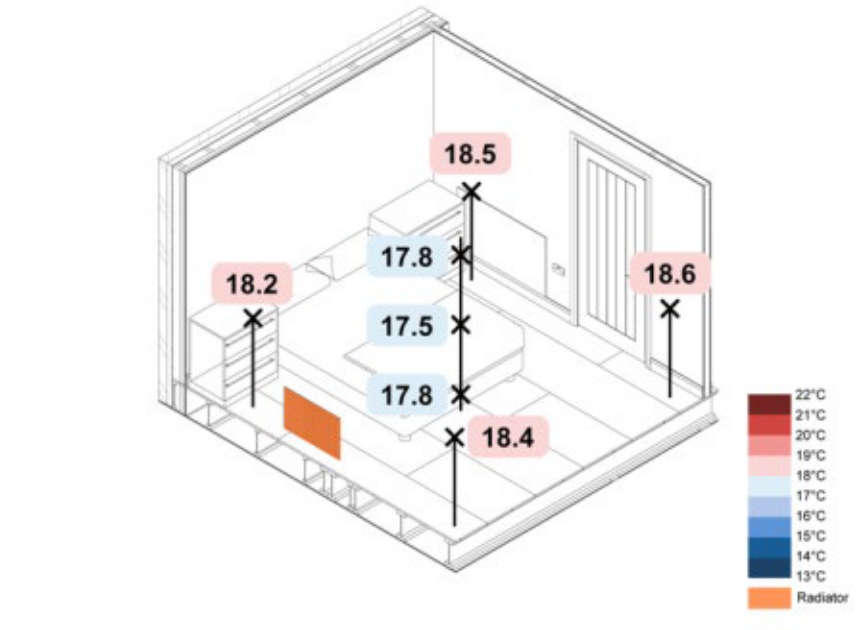
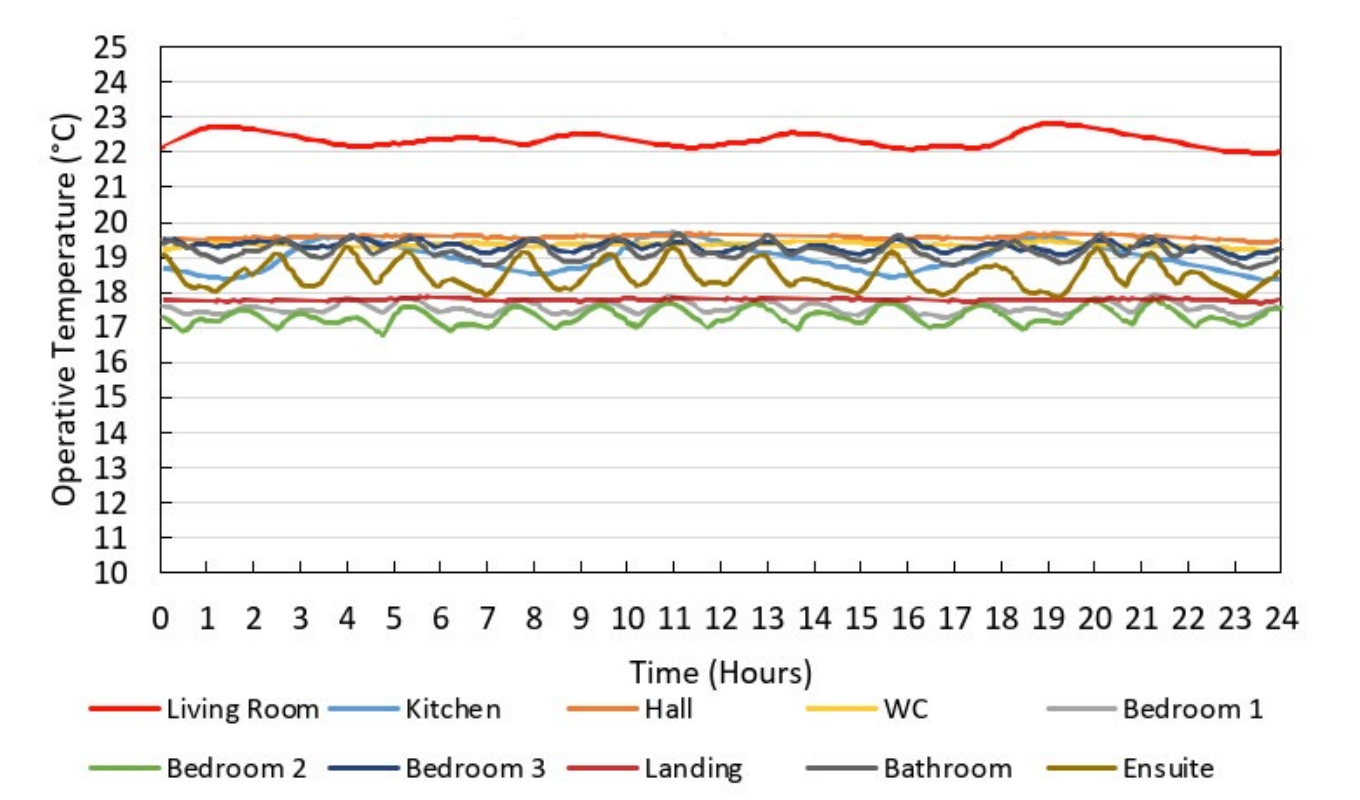
Takeaway: Largest spread of room temperatures across the day. The ASHP delivered CoP 1.7, the lowest of the three configurations, and the most expensive £/24h.
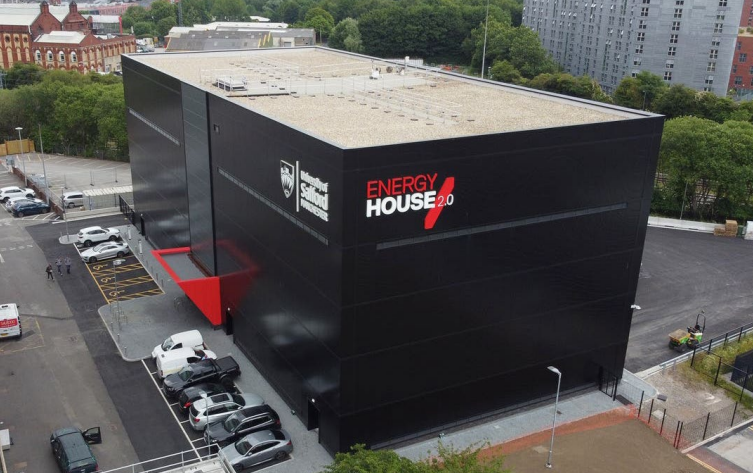
In October 2024, Barratt Developments and Bellway Homes built two detached houses inside Salford University's £16m Energy House 2 chamber to benchmark heating strategies for the Future Homes Standard. ThermaSkirt was the cheapest to run of all seven systems tested, 35% lower than steel panel radiators on the same class of heat pump.
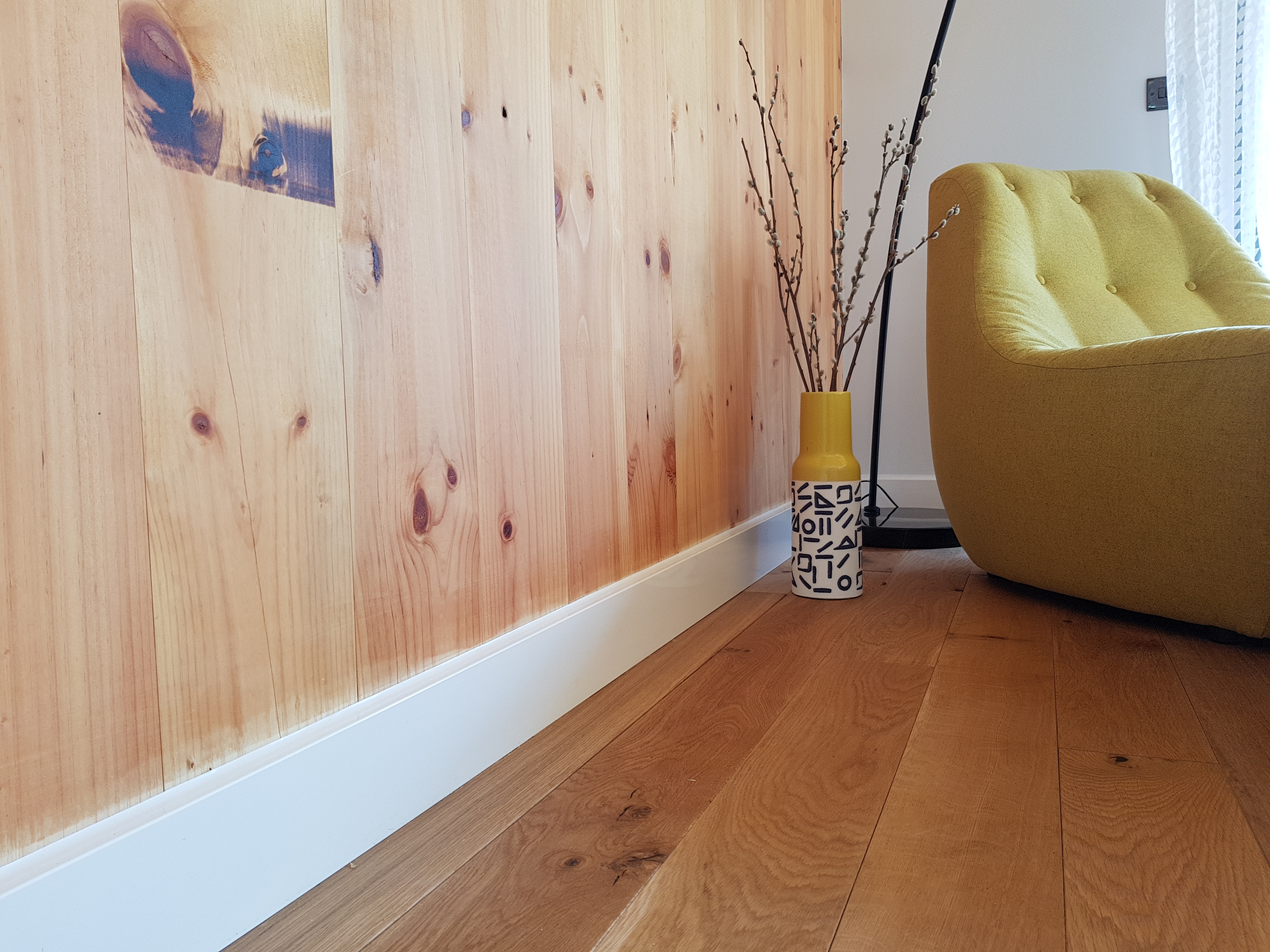
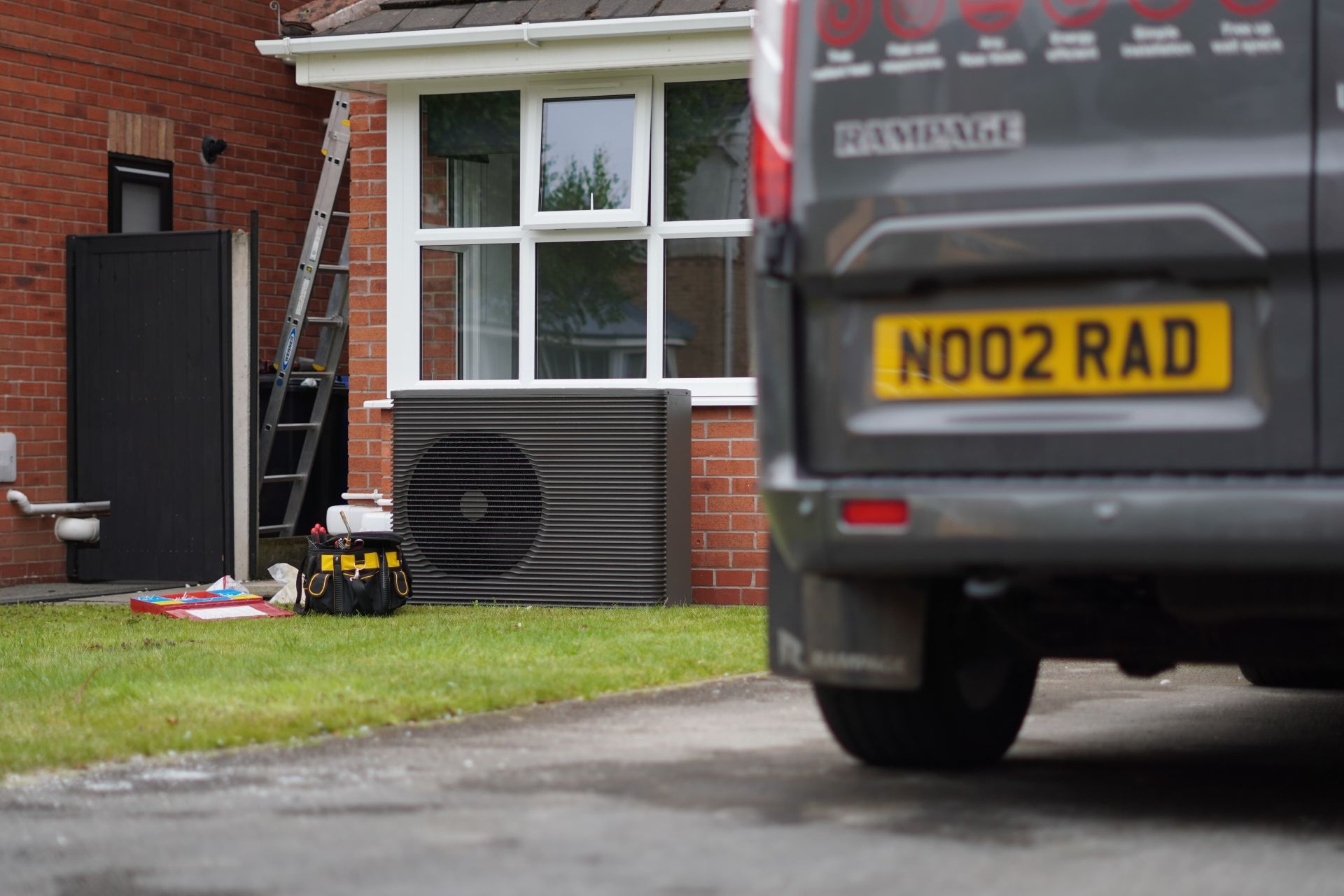
Salford University's Energy House 2 is a research facility that can hold full-size detached houses at temperatures from −20°C to +40°C, with controlled wind, rain and snow. Barratt Developments and Bellway Homes each built a typical detached property inside the chamber. Both were fitted with monobloc air-source heat pumps. The Barratt house ran ThermaSkirt throughout; the Bellway house was tested with two different emitter configurations: radiators only, then UFH at ground floor with radiators upstairs.
Room set points: 21°C in the living room, 18°C in kitchens and bedrooms (current Part L design temperatures). Each room was instrumented with sensors logging air and operative (comfort) temperature at one-minute intervals; electrical consumption was metered over each 24-hour test.
Figures below are extracted directly from the Salford University Energy House 2 Systems Report, dated 24 October 2024. SEEI = System Energy Efficiency Index (K/kWh): degrees of internal temperature lift achieved per kWh of input electricity. Higher is better.
| Heat emitter strategy | COP | SEEI (K/kWh) | 24h Energy | 24h Cost |
|---|---|---|---|---|
| Radiators only (Strategy A) | 1.7 | 0.62 | 34.4 kWh | £8.43 |
| ThermaSkirt throughout (Strategy B) | 2.3 | 0.94 | 22.5 kWh | £5.51 |
| UFH ground floor + radiators first floor (Strategy C) | 2.3 | 0.87 | 25.9 kWh | £6.34 |
Beyond the three monobloc-ASHP wet-emitter strategies, Salford also benchmarked loft heat pumps and ceiling/wall electric panel systems under the same −5°C continuous test conditions. ThermaSkirt came out cheapest of all seven.
24-hour running cost at −5°C ambient, continuous operation. Data redrawn from page 9 of the Salford University Energy House 2 Systems Report, 24 October 2024.
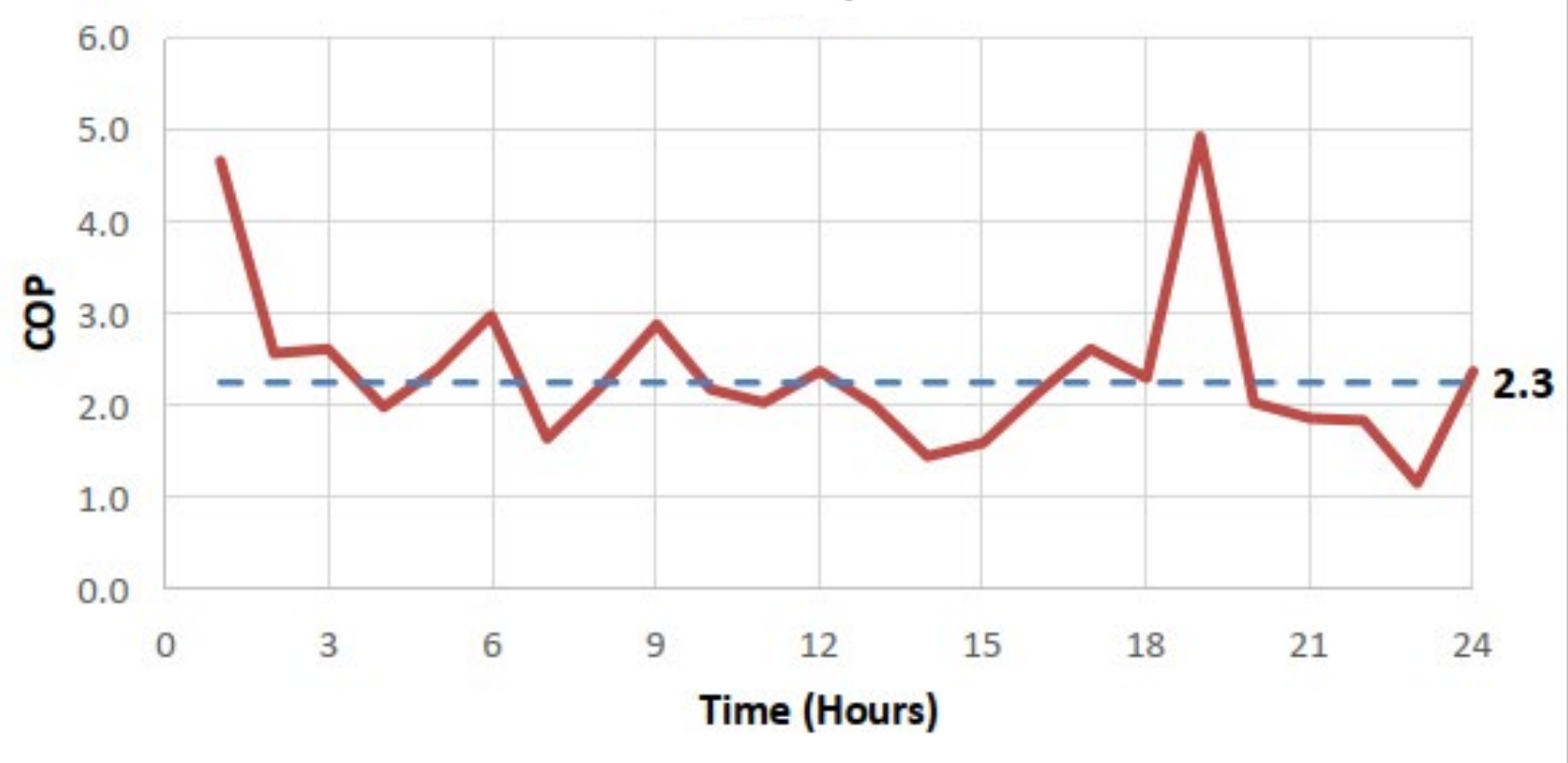
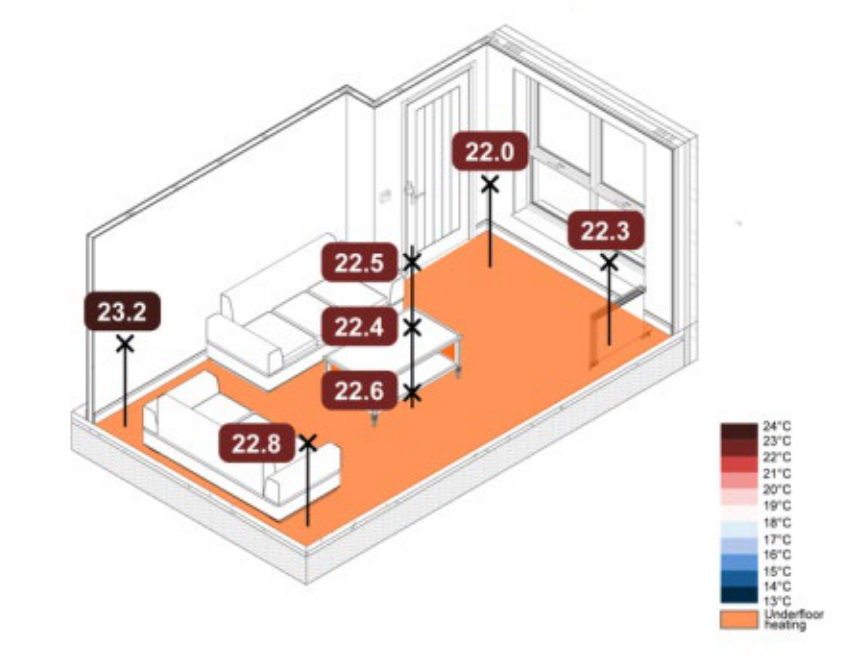
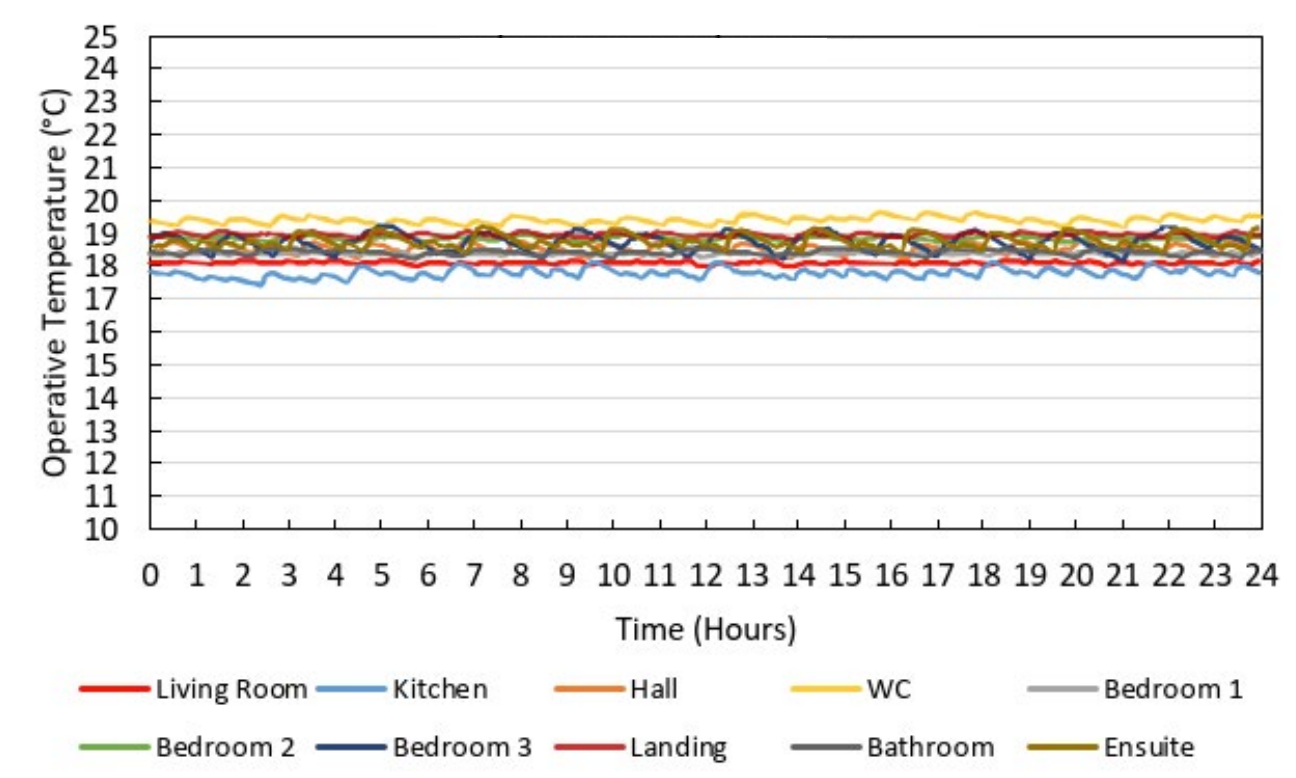
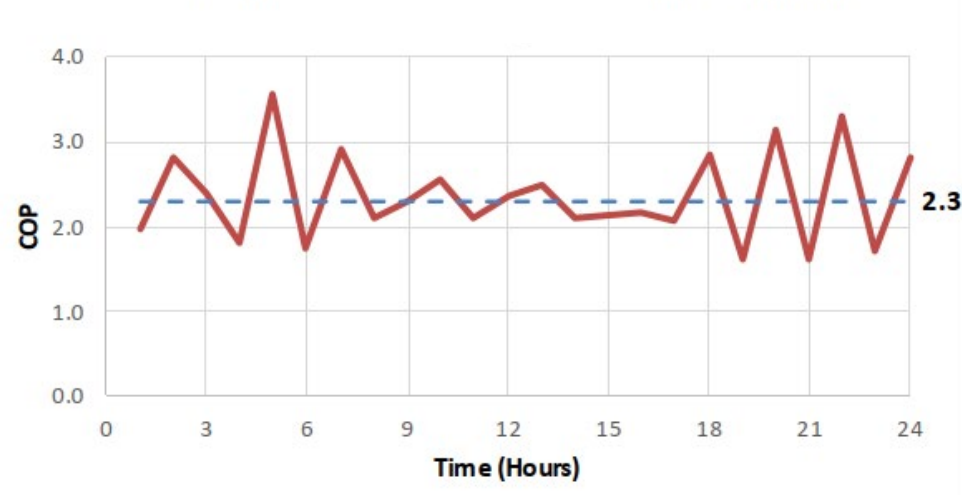
Each strategy was logged across 24 hours at −5°C ambient. For every scenario, the report plots room-by-room operative (felt) temperature, an isometric thermal snapshot of each floor at hour 7, and the heat pump's hourly CoP trace.


Takeaway: Largest spread of room temperatures across the day. The ASHP delivered CoP 1.7, the lowest of the three configurations, and the most expensive £/24h.


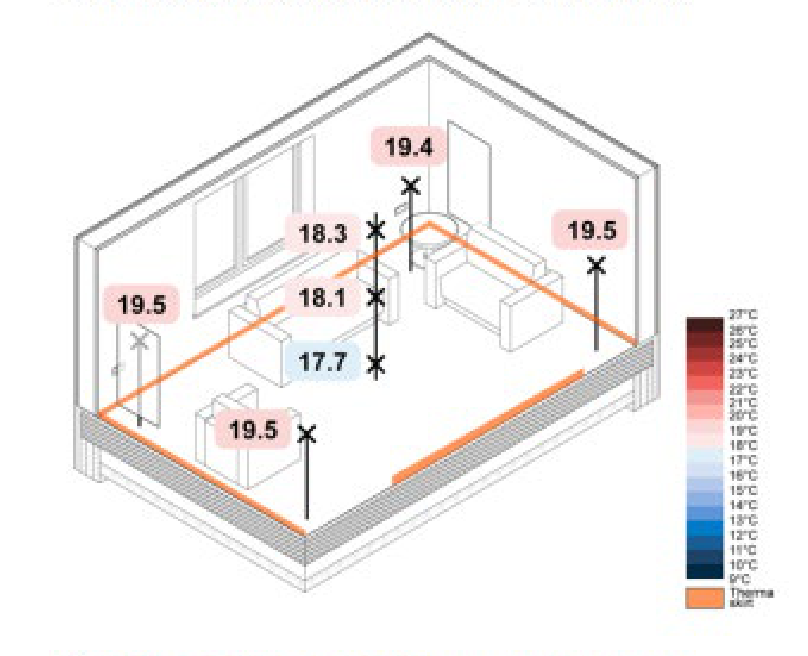
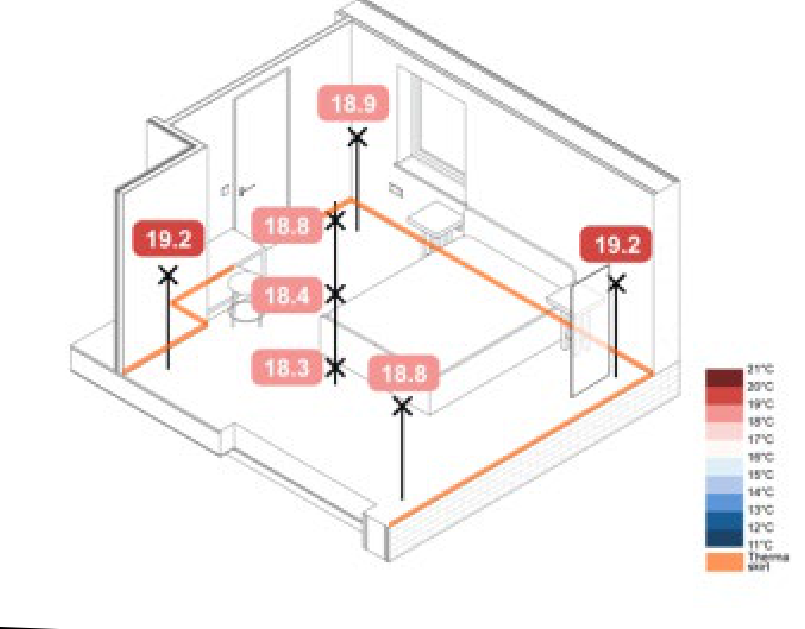
Takeaway: Tightest band of room temperatures and the highest SEEI of any configuration. CoP holds at 2.3 across the day. Cheapest to run of the seven systems Salford tested.


Takeaway: UFH downstairs lifts CoP to match ThermaSkirt, but the panel-radiator upstairs holds the daily energy higher. Middle-ground performance.
All charts and isometric snapshots reproduced from pages 7–9 of the Salford University Energy House 2 Systems Report, 24 October 2024.
Across all three emitter strategies, ASHPs underperformed in intermittent (SAP) mode at −5°C: they could not deliver heat fast enough to bring rooms to setpoint. Continuous operation is the recommended setup.
Too many zoned controls cause short-cycling of the heat pump and reduce the seasonal CoP. Keep zoning simple on ASHP-served systems.
Both perimeter-radiant and floor-radiant emitters delivered the flattest operative-temperature profiles room by room. Steel panel radiators showed the largest swings.
Radiators and ThermaSkirt match each other for response time. UFH's thermal mass smooths intermittent cycles but adds a long initial warm-up, a real consideration on shoulder-season days.
At £5.51 per 24 hours at −5°C, ThermaSkirt was the cheapest of all seven heating systems Salford tested, including radiators (£8.43), UFH + radiators (£6.34), loft heat pumps and ceiling/wall electric panels (£13–£15+).
Combining UFH at ground floor with radiators upstairs improved running cost over radiators alone, but did not match an all-ThermaSkirt installation.
Engineer's note: in this test the smaller BM2 profile was used in the living room. To reliably hit a 21°C setpoint in ground-floor living areas, our recommendation remains BM3.
Salford's engineers note that UFH at ground floor combined with ThermaSkirt at first floor would most likely produce the lowest overall running costs of any combination, but this hybrid was outside the scope of the 2024 programme.
“Discrete Heat has been a valued partner on this project, supporting the Z House projects, integrating with renewable technologies, and looking to understand the key challenges in delivering both a zero-carbon home and the Future Homes Standard.”
The complete 12-page synopsis includes operative-temperature charts for every room, hourly CoP traces, emitter sizing tables, and the underfloor heating manifold layout. Sourced from the Salford University Energy House 2 Systems Report, 24 October 2024.
More independent testing, output charts and methodology notes.
Our technical team can supply the full Salford dataset, heat-loss-matched schedules, and SAP/PHPP guidance for your scheme.