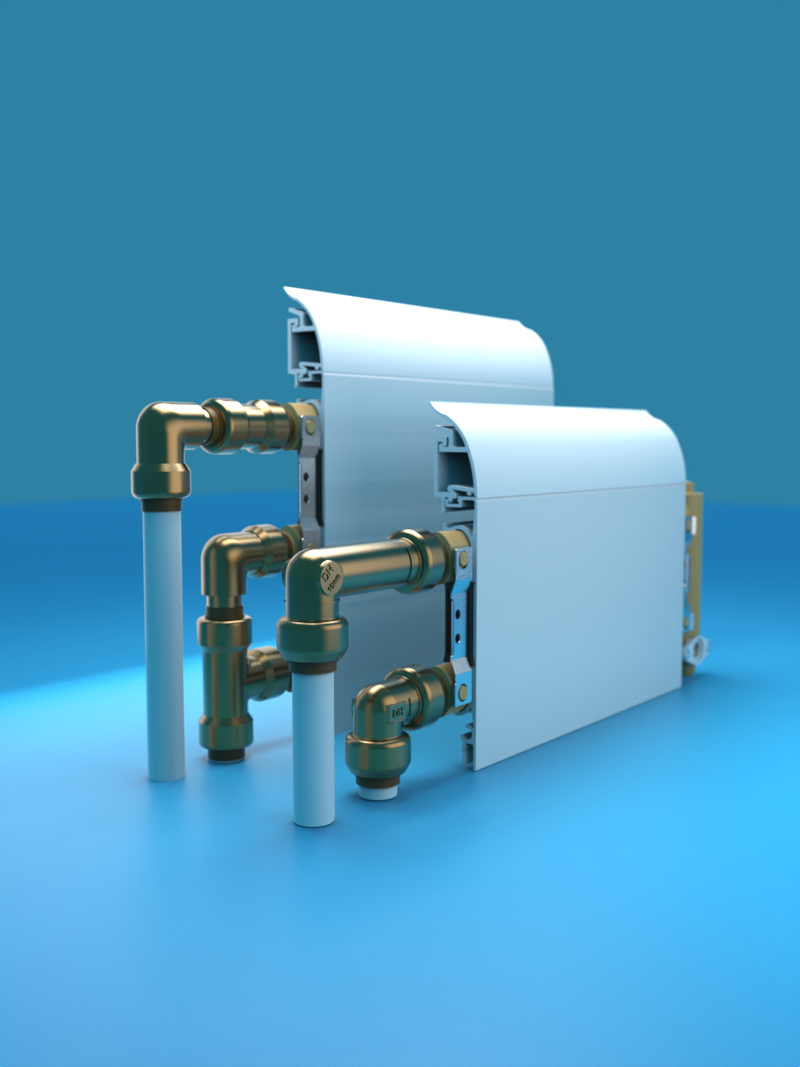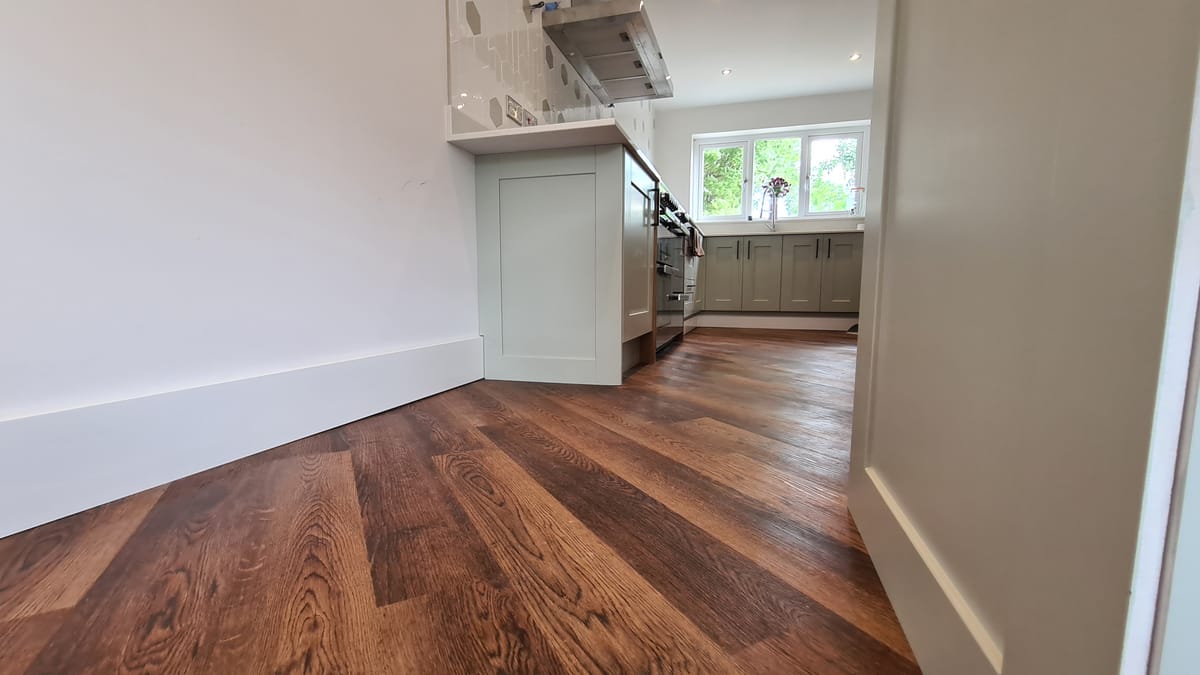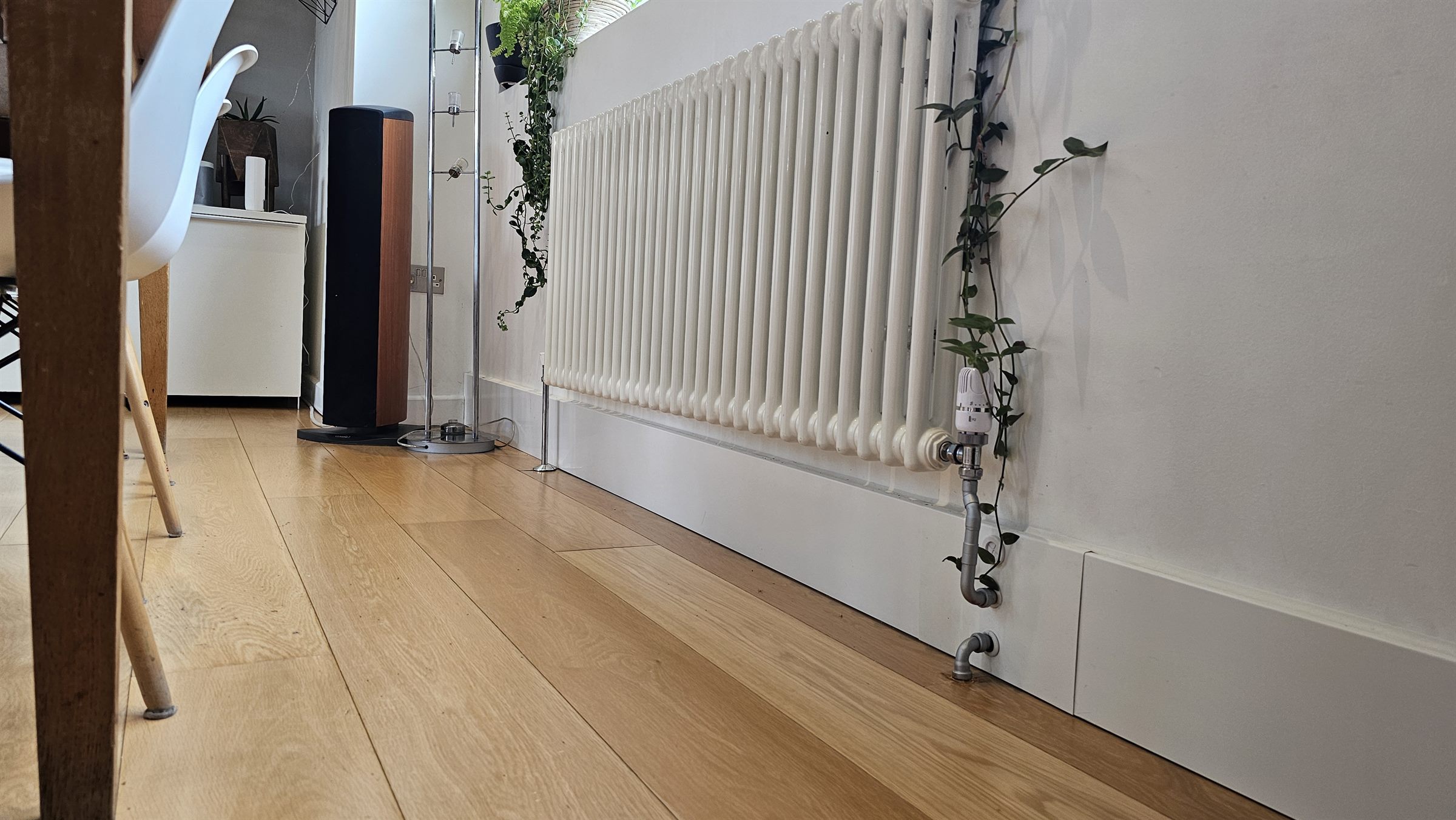
Add2Rad skirting emitter plumbed in series directly from the tails of an existing panel radiator
Heat Pump Retrofit Add-On

Keep the radiator. Add the low-flow boost.

Add2Rad supplements an undersized radiator with skirting-level emitter area, connected in series to the existing tails. Up to 90W per metre of extra output lets the original rad hold comfort at a 35–45°C heat-pump flow, without ripping it out, doubling its size, or lifting a single floorboard.

The retrofit case

Make existing radiators heat-pump viable, room by room.

90W/mExtra emitter output addedUp to, per metre of run
35–45°CHeat-pump flow temperaturesWithout oversizing rads
< 1 hrPer room, no floor liftingWhole home in a day
85,000+ThermaSkirt systems installedUK & 13 export markets
BS EN 442-1
BSRIA tested
Energy House 2.0
Salford validated
TÜV & TSE
Tested DE & TR
10-year warranty
40+ year lifespan
The retrofit area problem

Lower the flow temperature without ripping out the emitters.

Moving an older property from a 70°C gas boiler to a 45°C air-source heat pump requires significantly more emitter surface area to deliver the same heat into the room. Most legacy radiators are 30–50% too small for low-flow operation.

Often there simply isn't wall space to double the size of every radiator, and dropping the flow temperature without compensating for area leads to cold rooms and non-compliance with PAS 2035. The conventional fix, full radiator upsizing, drags in floor lifting, wall chasing, pipe rerouting and redecoration, the disruption that stalls the majority of heat-pump retrofits. Add2Rad sidesteps it by turning the room's existing skirting perimeter into active heating area, alongside the radiator you already have.
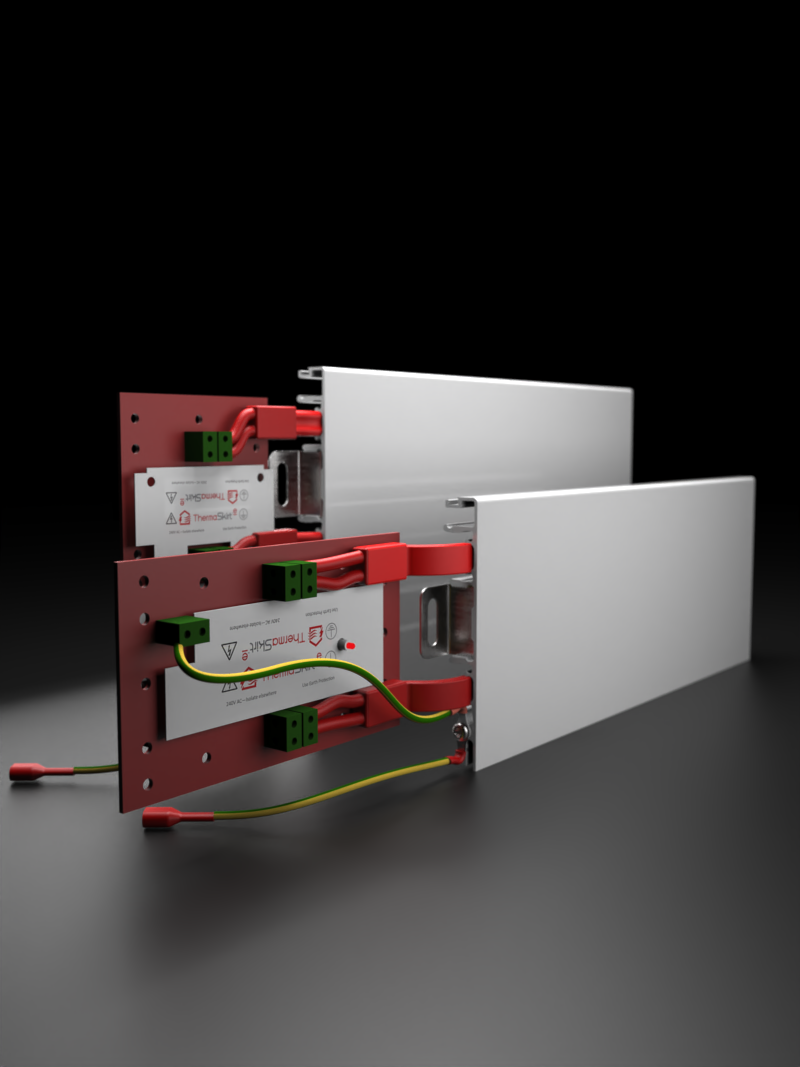
How it works

In series with the existing radiator tails.

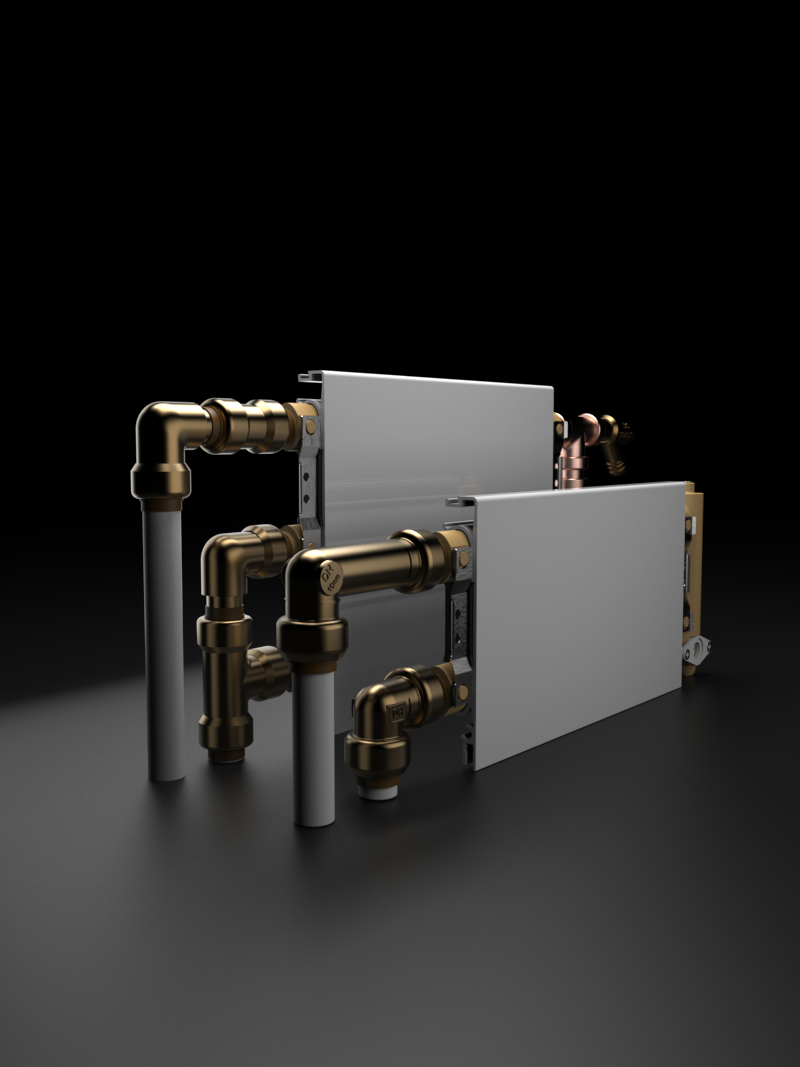
Add2Rad uses a universal connection kit to tee directly into the existing radiator's flow and return, above floor level. The skirting run is plumbed in series with the radiator, making it effectively an extension of the existing emitter. The existing TRV and lockshield are retained, so the room is controlled and balanced exactly as before. There is no need to drain the whole system, lift floors, or chase walls.

01 — Keep the radiator

All existing radiators and pipework stay in place. No removal, no relocation, no making-good.

02 — Add skirting area

ThermaSkirt extends the room's total emitter area, adding up to 90W per metre of run.

03 — Hit low flow temps

The combined emitter area holds comfort at 35–45°C, the band where the heat pump runs efficiently.

Why skirting area works at low flow

Radiant output spread around the full perimeter.

Pressed-steel radiators rely on convection, which falls away sharply as flow temperatures drop below 50°C. ThermaSkirt is primarily a radiant emitter, a high-emissivity aluminium face spread along the full length of the wall, so it keeps delivering useful output at low flow temperatures and targets the cold, damp external corners where fabric heat loss is greatest.

Adding that perimeter area lets the system hold comfort at a 35–45°C flow with fewer cold corners and reduced cycling. Because lowering the flow temperature is what raises a heat pump's efficiency, a 7–12°C reduction can lift CoP by roughly 0.2–0.3, the difference that closes the spark gap and reduces running costs. ThermaSkirt's output is independently tested by BSRIA to BS EN 442-1, with third-party validation at Energy House 2.0 (Salford) and further testing by TÜV (Germany) and TSE (Turkey).

How it compares

Add2Rad vs the conventional heat-pump-ready fixes.

When a radiator is undersized for low-flow operation, the brief usually narrows to three options: upsize the radiators, lay underfloor heating, or extend the emitter at skirting level. They behave very differently on disruption, programme and cost.

ConsiderationAdd2RadBigger radiatorsUnderfloor heating
Disruption to décorNone. Above-floor tee-in to existing tails; one short section of skirting removed.Visual impact, wall marking, FF&E clearance and usually making-good.Major construction. Floor lift and screed across the storey.
Occupied / tenanted homesDesigned for in-occupation work. No decant.Room clearance needed; disruptive for tenanted stock.Usually requires the resident to move out.
Heritage / rented compatibleYes. Slim perimeter detail, no fabric alteration.Bulk and panel size often unworkable.Not suitable in many existing floor build-ups.
Typical install timeUnder 1 hour per room; whole home in a day.1–2 days minimum once making-good is included.5–10 days plus screed cure.
Floor lifting / wall chasingNeither.Possibly, depending on pipe routing.Floor lifting required; chasing likely.
System drainNot required. Local tee-in to the radiator tails.Often required.Required.
Phased / room-by-room scopeYes. Coexists with retained radiators on the same circuit.Yes, but each room carries the full swap cost.Difficult; usually a whole-storey commitment.
Relative cost vs Add2RadBaseline.2–4× more expensive per heat-pump-ready room.5–10× more expensive.
Technical specification

The numbers for the schedule.

Additional outputUp to 90W/m (at 55°C flow). A typical 4m run adds ~360W.
Typical retrofit run3–6m per room
Operating temperature30–55°C flow (designed around 35–45°C heat-pump flows)
ConnectionUniversal Add2Rad connection kit, in series with the existing radiator tails
MaterialPowder-coated aluminium extrusion, pre-finished
Available lengths1.5m, 3m, 4m
ProfilesTwo heights available
DepthApproximately 20mm
Pipe compatibilityCopper or multilayer
FixingsClips and adhesive strip
FinishWhite, paintable
ExpansionBuilt-in expansion zone concealed behind the end cap
Warranty10 years (manufacturer), on all wet parts
Expected lifespan40+ years in domestic applications

Output tables and connection schematics are in the Add2Rad installation manual; full BSRIA test data and project case studies are in the specifier pack.

Installation

A single-trade, single-visit retrofit.

Add2Rad uses standard plumbing tools and standard plumbing skills. If an installer can connect a radiator, they can fit Add2Rad. No floor lifting, no wall chasing, no full system drain, and capacity of 3–5 rooms per two-person team per day for housing programmes.

  1. 01

    Design the boost

    Compare what the existing rad delivers at the target flow to the room heat loss. The shortfall sets the metres of ThermaSkirt required.

  2. 02

    Tee into the tails

    Break into the existing flow and return above floor level using the universal Add2Rad connection kit. No full system drain.

  3. 03

    Fit the skirting run

    Clip and bond the profile around the planned perimeter, looping back to the radiator. Existing TRV and lockshield retained.

  4. 04

    Refill, bleed, commission

    Restore pressure, bleed, optimise the flow temperature and capture the room-by-room commissioning data. 10-year warranty.

Under 1 hour per room
No floor lifting or wall chasing
Existing TRV retained
No specialist training
Compliance & programme delivery

Built for funded retrofit at portfolio scale.

Add2Rad supports low-temperature emitter design as part of a compliant heat-pump retrofit, and ships with the documentation programme teams and auditors need. On a 200-home portfolio it can avoid £150,000–£200,000 of radiator upsizing and underfloor heating cost, largely through labour efficiency and avoided void and decant time.

Programme compatibility

  • PAS 2035. Compatible with low-flow emitter design and energy modelling.
  • PAS 2030. Supports compliant heat-pump installation processes.
  • SHDF. Social Housing Decarbonisation Fund documentation provided.
  • ECO & Warm Homes Scheme. Aligned with government retrofit funding.

Documentation provided

  • Room-by-room commissioning & handover checklist
  • Flow / return temperature capture sheet
  • Before/after comfort snapshots (°C at intervals)
  • Photo evidence checklist (metre run, joints, finish)
  • SHDF KPI sheets and PAS handover forms
  • Risk & method overview (RAMS-style)
  • Sample NBS wording for emitter upgrades
Frequently Asked Questions

Everything you need to know

Does it require lifting floors or chasing walls?
No. The key advantage of Add2Rad is that it borrows the pipework already serving the room's radiator. You break into the flow and return tails directly above the floor and loop the skirting run in, so there is no floor lifting, no wall chasing and no full system drain. That is what makes it viable to roll out at pace on programmes like SHDF and to work in occupied, tenanted homes without a decant.
How is it controlled and balanced?
Add2Rad is fitted in series with the radiator, so it is effectively an extension of the existing emitter. The existing thermostatic radiator valve and lockshield are retained. When the TRV opens, water flows sequentially through the skirting run and the radiator, and the room is balanced exactly as a standard radiator install, no re-balancing of the index circuit.
How much additional output does it actually add?
Up to 90W per metre of run. A typical 4-metre run therefore adds around 360W to a room, which is usually more than enough to make up the shortfall left when an existing radiator is run at a lower heat-pump flow temperature. The shortfall against the room heat loss at your target flow sets the metres of ThermaSkirt required.
How do I size Add2Rad for a retrofit?
Calculate the output the existing emitters provide at the new desired flow temperature, then compare that to the room's heat loss. The difference is the output you need to make up, which converts directly into a length of ThermaSkirt at the rated W/m for that flow. The Add2Rad connection kit then branches the existing radiator tails into that run. Send the floorplan and heat-loss brief and the spec team will return a room-by-room emitter schedule.
How does it affect heat-pump CoP?
The lower the flow temperature, the higher the seasonal CoP, and maximising emitter area is what lets you drop the flow temperature without losing comfort. In real installs a 7–12°C reduction in flow temperature has lifted CoP by roughly 0.2–0.3 depending on the system, which can translate to hundreds of pounds a year in running cost on a domestic property.
Can it be retrofitted in occupied homes without redecorating?
Yes. There is no wall chasing, no boxing-in of new pipework and no floor lifting, and only a short section of skirting is removed, so there is nothing to make good afterwards. That is why it suits social landlords and families who cannot decant, with most rooms completed in under an hour and a whole home typically inside a day.
Is it PAS 2035 / SHDF compliant, and what data do we get?
Add2Rad supports low-temperature emitter design as part of a compliant heat-pump installation, and ready-to-use SHDF and PAS documentation is provided. After install you get room-by-room logs of heat loss, emitter length, flow temperatures and comfort levels, plus before/after evidence, packaged for PAS and SHDF reporting alongside KPI sheets and handover forms.
What is tested, and to what standard?
The ThermaSkirt emitter component is independently tested by BSRIA to BS EN 442-1, the European radiator test standard, with third-party validation at Energy House 2.0 (Salford University) and further testing by TÜV in Germany and TSE in Turkey. Published data includes power output curves at various flow and return deltas. Full output tables and test references are in the specifier pack.
Will it cope with the heat loss from large bi-fold doors or glazing?
Yes. ThermaSkirt emits very effectively, and surrounding the perimeter with warm aluminium counteracts the downdraught and fabric loss at the glazing. Add2Rad doubles down by retaining the radiator as well, and heated threshold kits are available for door openings where the run has to bridge an opening.
Can I keep some radiators and add ThermaSkirt only where it's needed?
Yes, that is the principle Add2Rad is built around. ThermaSkirt coexists with radiators and towel rails on the same heating circuit, so a programme can be specified room-by-room, upgrading only the rooms that fall short at the target flow temperature rather than a wholesale strip-out.
What is the warranty and lifecycle?
Ten-year manufacturer warranty on all wet parts. ThermaSkirt is a powder-coated aluminium extrusion expected to last 40+ years in domestic applications, scratch resistant, non-rusting and designed not to collect air, with a concealed expansion zone behind the end cap. It is a genuine fit-and-forget product; the surface is dusted like any skirting board, with no other maintenance.

Explore Other Products

View the rest of the ThermaSkirt range.

Retrofitting social housing or portfolios?

Add2Rad is the zero-disruption route to heat-pump readiness. Sector guides (including Social Housing), BM datasheets, the Add2Rad installation manual, independent BSRIA and Energy House 2 test data, and 30+ project case studies — one ZIP.