Meeting Next-Generation Standards
Under the Future Homes Standard (FHS), properties need to be heated using low carbon technologies, inherently driving flow temperatures down to 35–45°C. For national housebuilders, this presents a significant challenge: standard radiators must vastly increase in size, stealing saleable floor space.
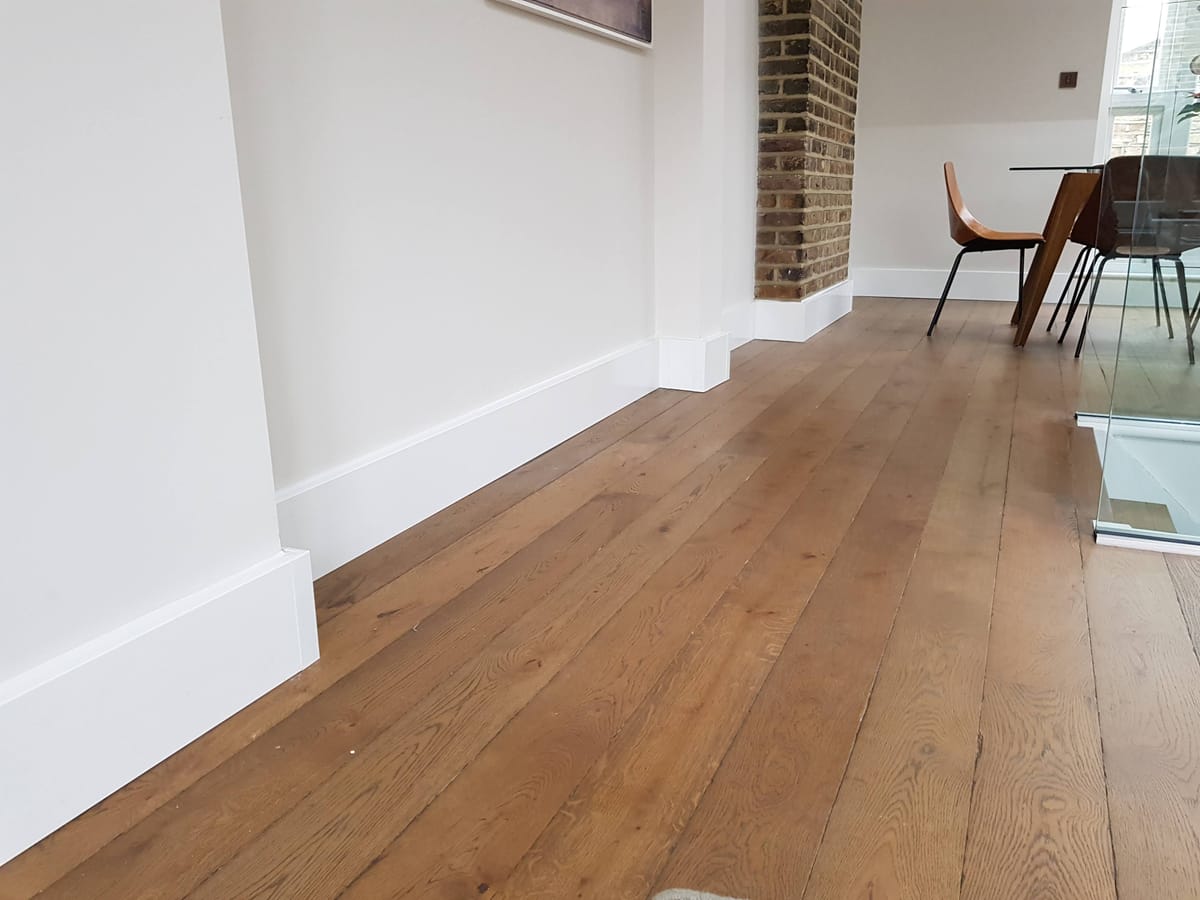
ThermaSkirt replaces the standard timber skirting and the radiator simultaneously. Because it acts as both your heating emitter and your primary room skirting, it distributes low-flow heat across the perimeter of the room. It frees up critical wall real estate and achieves a better score in HEM due to it being modelled as an underfloor heating system.
Floor Plan MaximisationReclaiming Saleable Floor Space
To run effectively on a heat pump, conventional radiators often must be upgraded to double or triple panels (Type 22 or Type 33). These intrusive units stand up to 160mm off the wall, aggressively projecting into the living space. In a standard mid-terrace house, this physical footprint equates to losing almost 10m² of usable area. This removes the pressure of achieving healthy home standards by better meeting accessibility requirements for Part M.
ThermaSkirt eliminates this constraint completely. Protruding no further than standard timber skirting, it enables interior designers and homeowners to place furniture tightly against the walls. For developers, this maintains the perception of spaciousness crucial for off-plan and show home sales, without compromising on thermal comfort.
10m²Reclaimed Space/Home
ReadyFor FHS
50%Less Embodied Carbon
Streamlining National Operations
Ordering, receiving, handling, and storing traditional radiators is a logistical nightmare for large sites. A typical mid-sized development will juggle over 250 different SKU variations to match specific room-by-room heat losses and manage layout constraints.
ThermaSkirt consolidates this entirely. With just two primary SKUs, our BM2 (114mm) and BM3 (170mm) profiles, cut-to-fit directly on-site, logistics are radically simplified. Furthermore, the installation process inherently combines heating and joinery into a single operation, entirely removing the second-fix plumber visit.
By utilising our kit of parts delivery service, contractors can completely eliminate on-site processing of materials, wastage, and drastically improve installation times, with many plots being completed in less than one day.
Flexible SpecificationWhole House or First Floor
ThermaSkirt is designed to flex around the specification strategy that best suits the project. Whether deployed as the sole emitter throughout the property, or selectively on the first floor to complement ground-floor underfloor heating, it delivers an optimal balance of comfort, cost, and space efficiency.
Option AWhole House Emitter
Replace every radiator in the home with ThermaSkirt. Every room benefits from perimeter radiant heat at low flow temperatures, with zero wall space sacrificed. One emitter system, one trade, one programme.
- ✓ Maximum floor space reclaim across the entire home
- ✓ Eliminates all radiator SKUs from the site programme
- ✓ Single installed system for consistent aesthetic throughout
Option BFirst Floor Complement
Increasingly popular with national developers: pair ground-floor UFH with first-floor ThermaSkirt. The UFH provides a low-and-slow radiant baseline downstairs, while ThermaSkirt delivers controllable, responsive heat above carpet level in the bedrooms, where space saving matters most.
- ✓ Maximum bedroom comfort with rapid controllability
- ✓ Price point comparable to first-floor radiators
- ✓ Saves space where bedrooms are typically the smallest rooms
Tested by Major Developers
ThermaSkirt's viability for the Future Homes Standard has been rigorously validated in real-world scenarios. We are proud participants in the cutting-edge Barratt Energy House 2.0 chamber, a climate-controlled facility built in partnership with the University of Salford to test the exact heating technologies required for zero-carbon homes.
Additionally, our system was successfully deployed in the Taylor Wimpey zero-carbon home project, proving that high-volume national housebuilders can integrate ThermaSkirt seamlessly into their standard build schedules without delays, while achieving supreme SAP scores.
ThermaSkirt vs. Oversized Heat Pump Radiators
| Feature | ThermaSkirt | Oversized Radiators (Type 22/33) |
|---|
| Floor Space Impact | Reclaims up to 10m²; flush to wall. | Protrudes up to 160mm, stealing valuable space. |
| Supply Chain & Logistics | 2 primary SKUs (cut to fit on site). | 250+ SKU variations required. |
| Second Fix Plumber | Not required; integrates with joinery. | Mandaory second-fix visit required. |
| Aesthetic Appeal | Clean lines; preferred by homebuyers. | Bulky and intrusive in modern rooms. |
ThermaSkirt vs. Underfloor Heating (UFH)
| Feature | ThermaSkirt | Screed Underfloor Heating |
|---|
| Screed Drying Delays | Zero delay. Installed immediately at second fix. | Halts site progression for weeks while curing. |
| Responsiveness | Heats the room in minutes. | High thermal mass creates hours of lag time. |
| Embodied Carbon | Recycled aluminium; very low carbon footprint. | Heavy cementitious screed and expansive plastic. |
| First Floor Integration | Standard joist installation with simple perimeter drops. | Requires specialized spreader plates and thicker floor build-ups. |