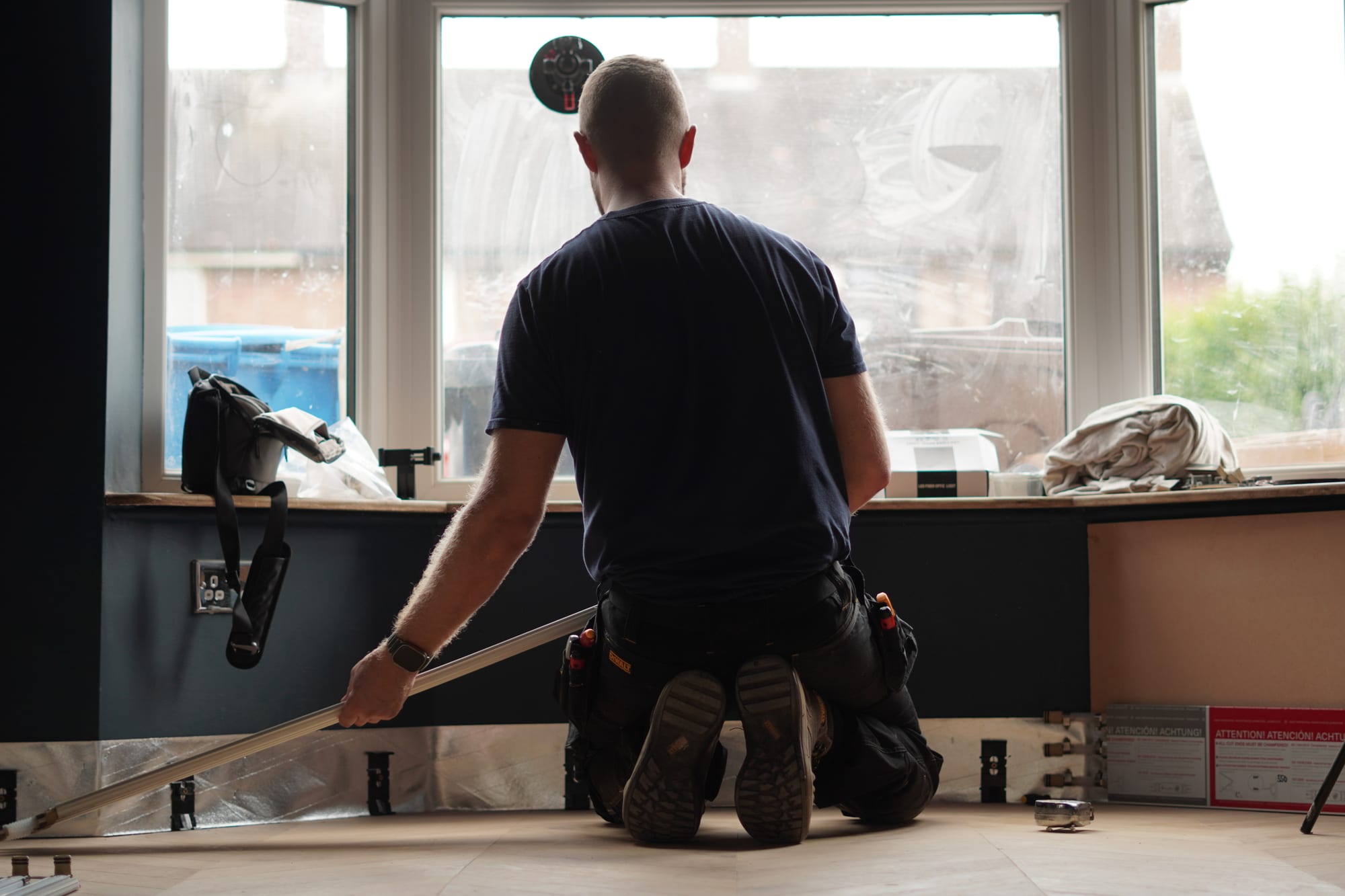
A close-up of a ThermaSkirt profile being cut precisely with an aluminium saw blade
Installation Guide

Plumbing and joinery, combined.

ThermaSkirt is engineered specifically to bridge the gap between plumbing and second-fix joinery. To achieve a flawless finish, the installer must be competent in both disciplines. Is it a DIY project, or should you hire a professional? Let's break down the requirements.

Assessing Your DIY Capabilities

ThermaSkirt combines basic plumbing with simple joinery. The system has been specifically designed to make DIY installation achievable for any competent homeowner. If you are comfortable working with pipework and a chop saw, this is well within reach.

The Plumbing Phase

ThermaSkirt operates exactly like a standard radiator. To fit it yourself, you need to be comfortable draining down your existing central heating system, isolating the boiler, and locating the old radiator drops (the 15mm Flow and Return pipes). You may need to reroute or extend them slightly to line up with the ThermaSkirt connection points at the corners of the room.

ThermaSkirt uses 15mm or 16mm Tectite push fit fittings from Pegler to connect from the ThermaSkirt fittings onto the existing pipework. This is a simple but secure brass push fit system. No soldering or specialist tools required.

Whilst there is no legal requirement in the UK for a plumbing qualification to move pipes, the same cannot be said for electrics. If you are installing the electric version, ThermaSkirt-e, we recommend using a qualified electrician to install any fused spurs and first fix wiring of controls.

The Second-Fix Phase

The Joinery Requirements

The system has been designed to remove the need for high precision. Every corner and connection has a built-in tolerance, giving each section a good degree of discrepancy if required. The corner covers and end caps overlap, which hides all the cuts and requires no mitering at all.

The skirting profile, whilst rigid and strong, will flex to fit gradually undulating walls. A flexible top gasket makes up for any additional undulation in the plaster, so you do not need perfectly flat walls to achieve a clean finish.

A good quality chop saw is recommended for clean cuts. A hacksaw will work, but the thickness and strength of the aluminium does make using one quite a challenge. Overall, the system is very forgiving for the uninitiated.

Which Route Is Right for You?

Frequently Asked Questions

Everything you need to know

Does installing it myself void the product warranty?
No. DiscreteHeat maintains the 10-year manufacturing warranty on the aluminium profiles and components regardless of who installs them. However, we do not warranty faults with the installation such as the standard of finish, damage to components, or issues as a result of not following the provided instructions.
Can I cut the profiles with an angle grinder?
Absolutely not. An angle grinder will overheat the aluminium, melt the factory paint finish, and create an incredibly jagged cut that will not fit inside the connection covers. You must use a sliding compound mitre saw with a negative-rake aluminium blade.
Do you supply the required saw blades?
No, we don't supply saw blades as any multi-purpose or aluminium-friendly blade will be suitable. These are readily available from hardware stores such as Wickes or Screwfix.
Who can fit it?
DiscreteHeat have a growing list of authorised installers; call us to find one near you. Otherwise, a competent plumber or joiner can install. Boilers and gas heating equipment need a Gas Safe registered installer; pipework and radiators don't.
Is it a DIY job?
It certainly can be. If you'd rather not do the plumbing, get a plumber to put your pipes in for you, then download the templates so they install them in the right place. The online designer gives you cut lengths and lets you decide where the pipe positions go.
How easy is it to fit ThermaSkirt?
If you download the pipe and fitting templates, it will make your job a lot easier. It's more involved than a radiator, but simpler than skirting — no mitring, butt-and-scribing or filling and caulking required.
How long does installation take?
A typical room can be completed in half a day by a qualified installer, or a day by most DIYers. A full house install usually takes 2–3 days depending on the number of rooms.

Decided to leave it to the pros?

Upload your room dimensions and we will connect you with a factory-trained Registered Installer.