CIBSE guidance & ThermaSkirt.
Which CIBSE TM guides and Building Regulations ThermaSkirt is relevant to, what each requires, and how the system contributes, set out as a compliance matrix for specifiers.
How to read this: ThermaSkirt contributes to compliance against the guides and regulations below; it does not, by itself, guarantee a pass. Each assessment remains the responsibility of the designer and depends on the whole building. This page summarises where ThermaSkirt helps and points to the supporting evidence.
One emitter, touching several guides at once.
Because ThermaSkirt changes how heat is delivered, distributed and built into the structure, it shows up across several CIBSE guides and parts of the Building Regulations, from energy and overheating to wellbeing, embodied carbon and accessibility.
The matrix below is the quick reference: the requirement, ThermaSkirt's contribution, and where to find the evidence. The detail sections expand the points that matter most to a specification.
- ThermaSkirt is relevant to the Building Regulations Parts L, O and M, and to CIBSE guides TM40, TM52, TM54, TM59 and TM65.
- Part L: low flow temperatures (down to 35°C), shorter pipe runs and room-by-room control improve heating efficiency.
- Part O / TM59 overheating: low thermal mass and a rapid off-response help a dwelling shed heat quickly.
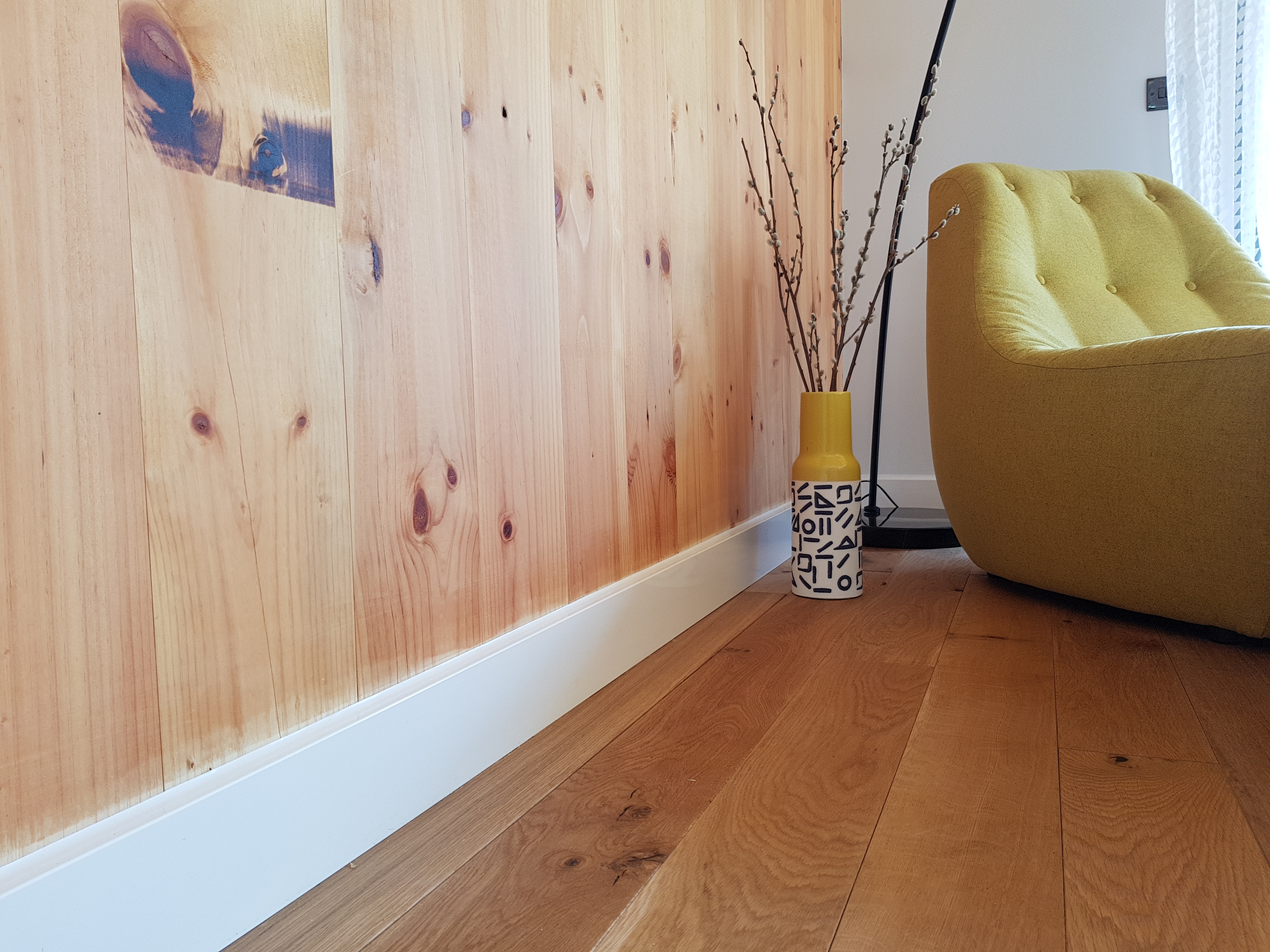
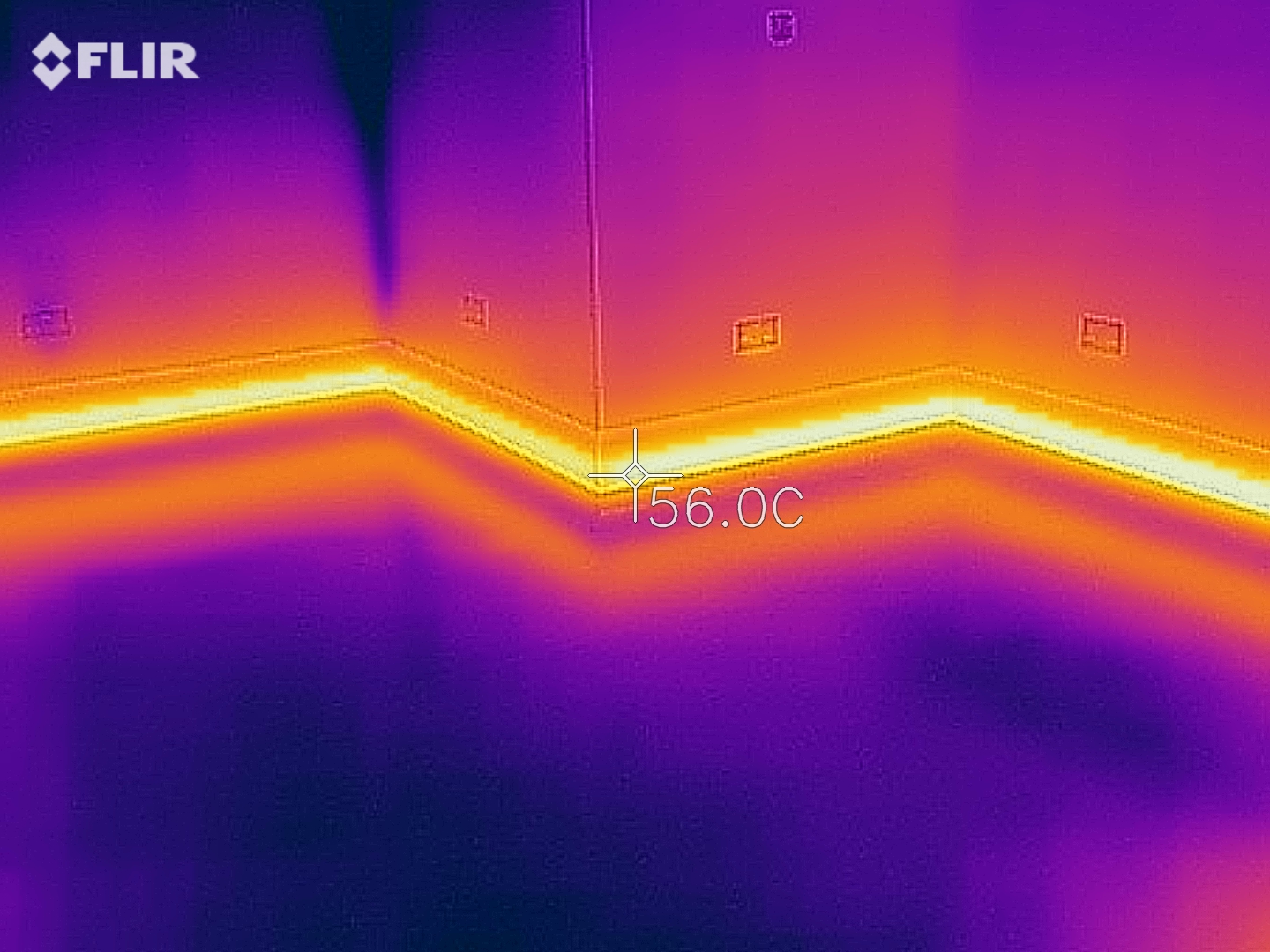
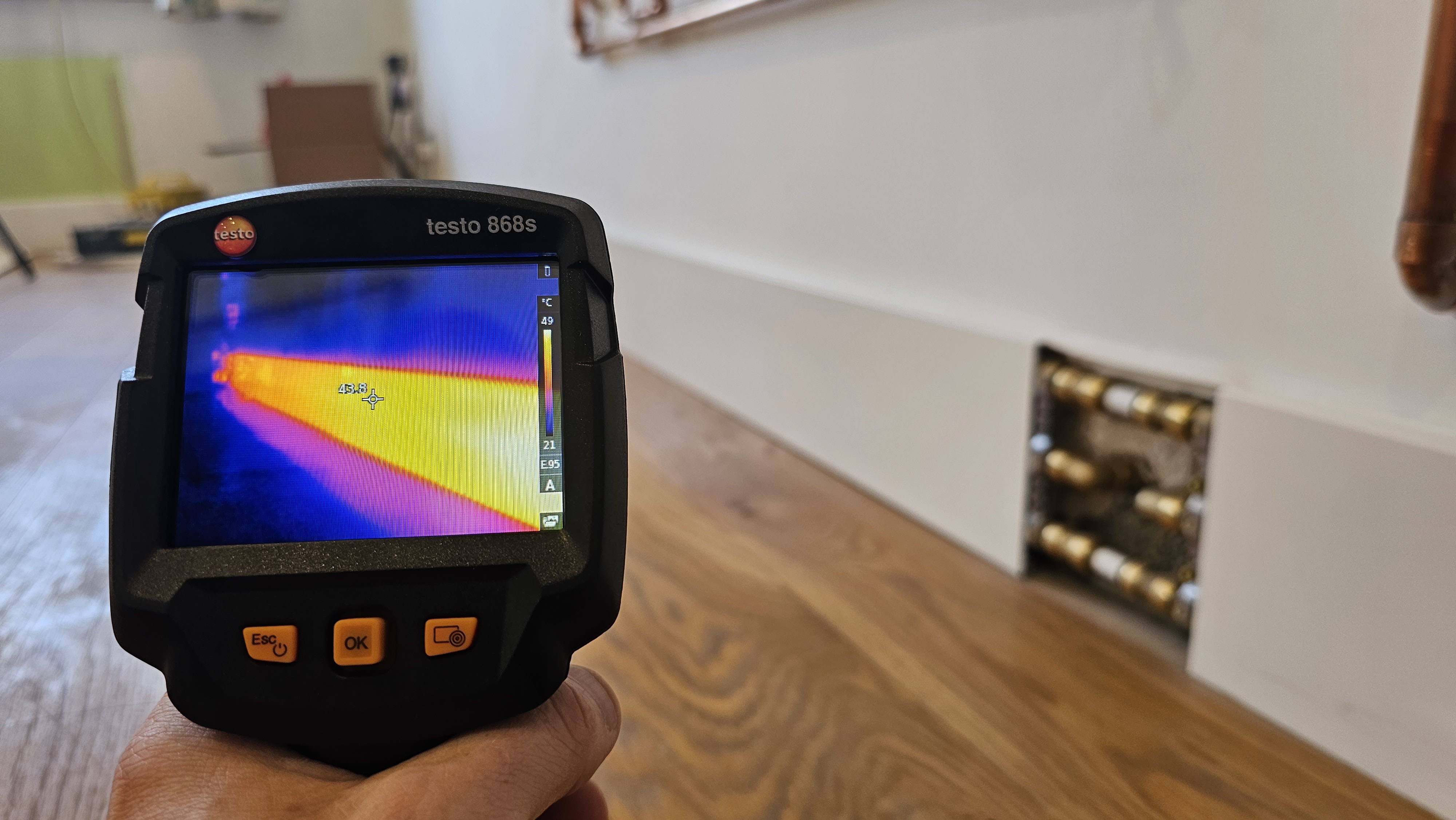
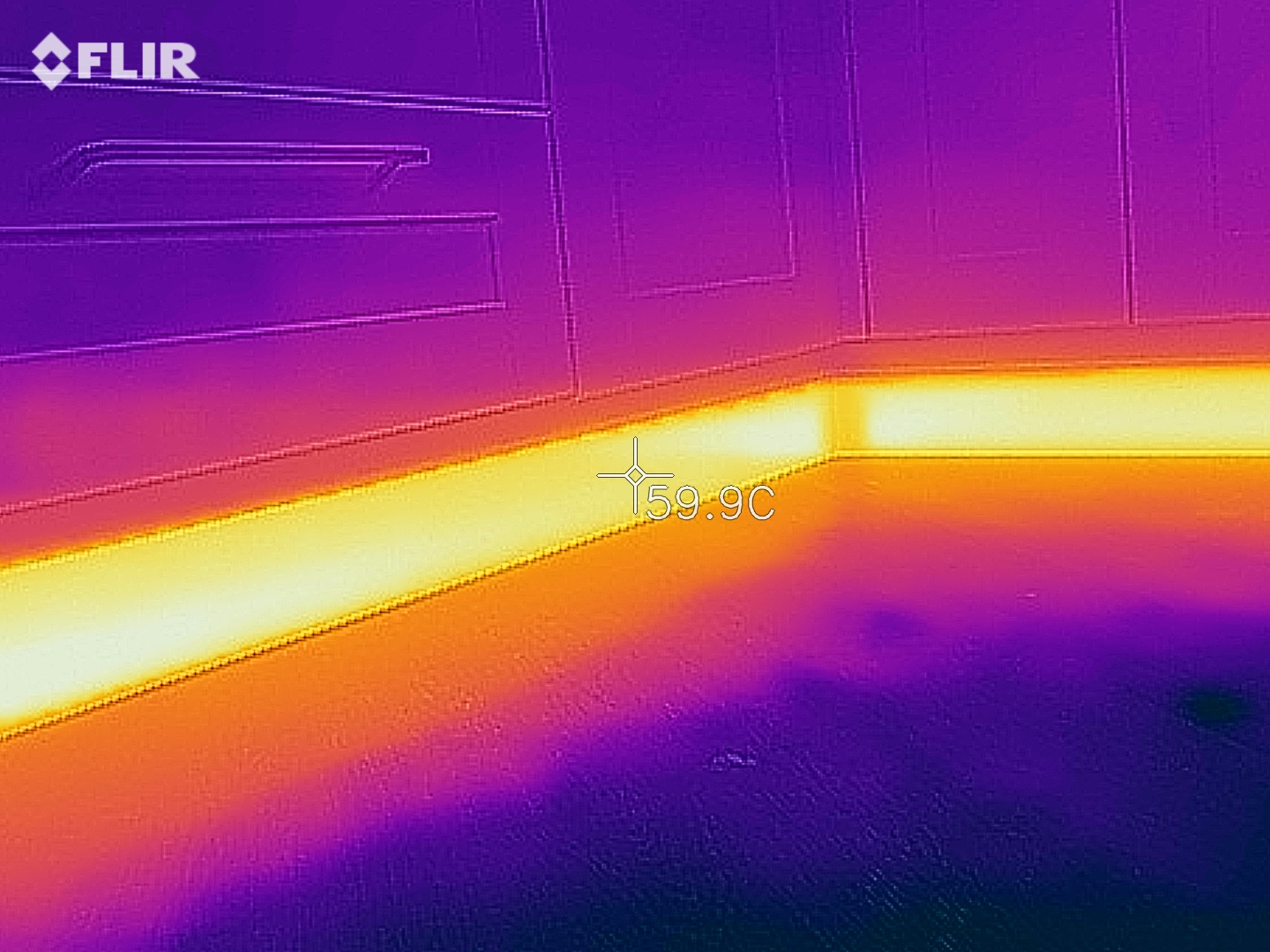
- TM40 wellbeing: even radiant comfort, low surface temperature (below 43°C), easy-clean surfaces and no protruding hot or trip hazards.
- TM65 embodied carbon: recycled aluminium, no screed and full recyclability, with a verified aluminium EPD available.
- Part M access: a continuous low-level emitter keeps circulation routes clear of protruding radiators.
- ThermaSkirt contributes to compliance against these guides and regulations; it does not, by itself, guarantee a pass. The responsible designer makes the assessment.
Guide by guide, requirement and contribution
The guides and regulations ThermaSkirt is relevant to, with what each asks for and how the system helps. Follow the links for the underlying evidence.
| Guide / regulation | Requirement | ThermaSkirt contribution | Evidence |
|---|---|---|---|
Part L Conservation of fuel & power | Limit the energy demand and carbon emissions of the heating system. | Operates at low flow temperatures (down to 35°C), with shorter pipe runs and room-by-room control, improving efficiency at low ΔT. | HEM & SAP → |
Part O / TM59 Overheating (domestic) | Demonstrate that the dwelling mitigates the risk of overheating. | Low thermal mass and a rapid off-response let the system shed heat quickly, with close temperature control. A contributing factor, not a guarantee. | Response data → |
TM52 Overheating (non-domestic) | Avoid overheating in non-domestic and commercial buildings. | The same low-inertia, rapid-response behaviour helps control comfort temperatures in commercial spaces. | – |
TM54 Operational performance | Narrow the gap between modelled and actual in-use energy. | A low-inertia emitter responds closely to demand, helping reduce the performance gap between design and operation. | – |
TM40 Health & wellbeing | Support occupant health, comfort and wellbeing. | Even radiant comfort, reduced air movement and dust circulation, easy-clean surfaces, low surface temperature (below 43°C) and no protruding hot surfaces or trip hazards. | Comfort evidence → |
TM65 Embodied carbon of building services | Account for the embodied carbon of MEP and building services. | Recycled aluminium, no screed, fully recyclable, with a verified aluminium EPD available. MEP can be a large share of embodied carbon (around 27% new-build, up to 75% retrofit). | Environmental data → |
Part M Access & use of buildings | Provide accessible, hazard-free circulation and use. | A continuous low-level emitter removes protruding radiators that obstruct circulation and wheelchair clearance, with no hot surfaces at reach height. A design advantage supporting Part M objectives. | – |
HBN 00-09 Healthcare (infection control) | Safe, cleanable heating for healthcare environments. | The EasyClean profile meets anti-ligature and safety requirements without the separate casings that radiators need. | Healthcare → |
Compliance is assessed for the whole building by the responsible designer. ThermaSkirt contributes to these requirements but does not guarantee a pass on its own. TM references are to the relevant CIBSE Technical Memoranda.
The points that matter most to a specification
Overheating: Part O, TM59, TM52
Overheating assessments reward systems that can stop adding heat quickly. ThermaSkirt has a low water volume (0.48 L/m BM2, 0.72 L/m BM3) and low thermal mass, so it heats up and cools down in minutes rather than hours, and pairs with close room-by-room control. This supports an overheating strategy; it does not by itself guarantee a pass.
Wellbeing: TM40
TM40 frames heating around occupant wellbeing. Radiant perimeter heating gives even comfort with less air movement and dust circulation than a convector, runs at a low surface temperature (below 43°C), and presents no protruding hot surfaces or trip hazards, which also supports CDM safety objectives.
Embodied carbon: TM65
TM65 brings the embodied carbon of building services into whole-life assessments, and MEP can be a large share of the total. ThermaSkirt uses recycled aluminium, needs no screed, and is fully recyclable, with a verified aluminium EPD available to support a TM65 calculation.
Accessibility: Part M
A continuous low-level emitter keeps wall space clear of protruding radiators that can obstruct circulation routes and wheelchair clearance, and it presents no hot surfaces at reach height. These are design advantages that support the objectives of Part M.
Designing for low-temperature heating without radiators
Our CIBSE-accredited CPD covers radiant versus convective heat transfer, the BSRIA comfort evidence, Building Regulations compliance and specification support. It is written for architects, M&E consultants and building services engineers, and can be delivered to your team.
Request a CPDRadiant vs convective heat transfer, and why it matters for low-temperature systems.
The BSRIA comfort and distribution findings.
Building Regulations and CIBSE compliance routes.
Specification support and worked examples.
Everything you need to know
Does specifying ThermaSkirt guarantee compliance?
How does ThermaSkirt help with Part O and TM59 overheating?
How does ThermaSkirt support TM65 embodied carbon assessments?
How does it relate to Part M accessibility?
What does the TM40 wellbeing case rest on?
Is there a CPD available for our team?
Explore the supporting evidence
The data behind the embodied-carbon, wellbeing and overheating cases in the matrix.
Specifying ThermaSkirt against CIBSE guidance?
Our technical team can supply the evidence behind each row of the matrix and support your compliance case, from Part L to TM65.