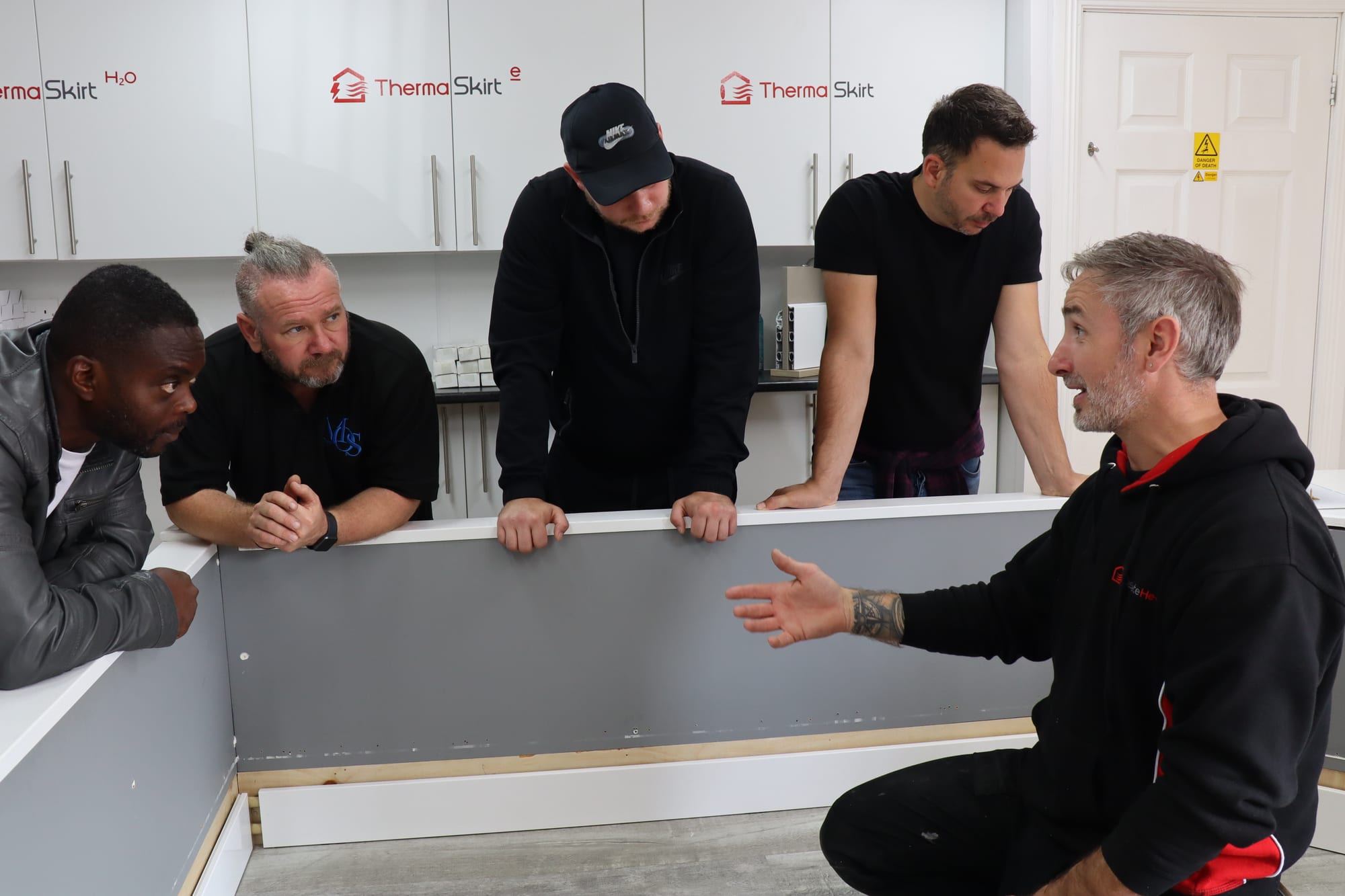
An engineer delivering a technical CPD presentation to an architectural practice
Training & Education

CIBSE-Approved Technical Seminars.

Book our industry-leading CPD session: 'Low Flow Radiance'. A rigorous, in-person engineering seminar on integrating radiant baseboard heating with Air Source Heat Pumps to satisfy Part L and the Future Homes Standard.

The Challenge

Decarbonising heat without compromising the build.

The Future Homes Standard, SAP 10 and the UK's Clean Growth Strategy require new homes to be served by low-carbon heating, and existing stock to be upgraded toward Net Zero by 2050. The way we generate heat has changed; the emitters we use to deliver it largely have not.

Wall-hung radiators sit awkwardly with the pressure on architects, consultants and developers to maximise useable floor area. Every square metre carries an appreciable value, and surrendering a stretch of wall to a steel panel is an increasingly difficult decision to defend.

Underfloor heating brings its own programme cost: time on site, screed weight-loading, restricted floor finishes, overheating risk in well-insulated envelopes, and warranty exposure when faults arise below the slab.

Radiant skirting offers an above-ground, low-water-content emitter that combines the heating and the skirting board in a single trade package, with rapid response on and off. Our CPD examines where that solution fits, where it does not, and the building physics that govern the decision.
What You'll Cover

The agenda: Low Flow Radiance.

A 45-minute technical session followed by 15 minutes of Q&A, tailored to M&E consultants, sustainability assessors and principal architects. Each topic is grounded in independent test data, published academic work or current CIBSE / Department of Health guidance.

Emitter geometry & heat pump CoP

Why low water content and a continuous radiant surface lift the seasonal CoP of an Air Source Heat Pump compared with high-mass Type 22/33 radiators or screeded UFH circuits.

Radiant vs convective heat transfer

A working introduction to P.O. Fanger's thermal comfort model and how a predominantly radiant emitter changes operative temperature, occupant comfort and the required air temperature setpoint.

Overheating risk under CIBSE TM 59

How the low thermal mass and rapid response of skirting emitters help apartment and high-rise schemes pass dynamic overheating assessments without resorting to active cooling.

Underfloor heating burden, in numbers

A typical 70 m² apartment with screeded UFH carries 7–9 tonnes of cement screed, lengthy first-fix, lead-in times for floor coverings and warranty constraints. We unpack the real programme and weight-loading cost of UFH on modern construction.

Healthcare & assisted living LST compliance

Why a sub-43°C surface temperature matters for Department of Health LST guidance, and how the extruded aluminium ThermaSkirt section stays compliant without bulky LST radiator guards.

Electric ThermaSkirt safety

The self-regulating PTC heating element used in ThermaSkirt-e, why it cannot overheat under fault conditions, and how this opens up sectors where wet pipework is impractical (refurb, off-grid, single-room retrofits).

Resident safety vs traditional radiators

The RoSPA data: more than 29,000 home injuries per year mention radiators. We look at how recessing the emitter into the skirting profile removes the protruding hot panel from circulation routes.

Verified output data

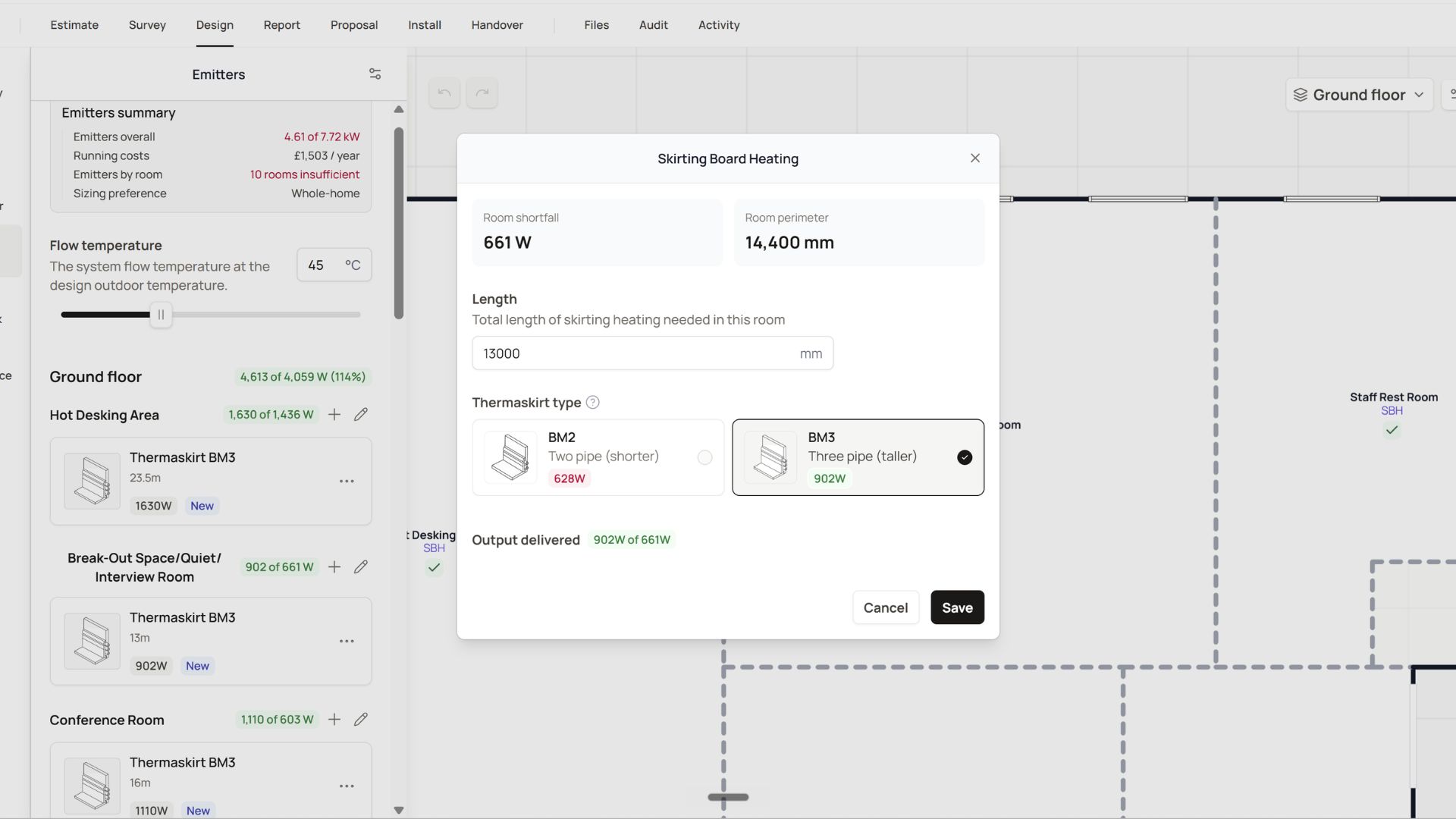
Independent test data for the H₂O range — e.g. BM2 at ΔT50°C delivers 125 W/m — so you can size schemes confidently against your room-by-room heat loss schedules.

How It Runs

Hosted at your practice.

Sessions are delivered in person at your architectural practice, M&E consultancy or main contractor headquarters by our technical specification team. We cover the entirety of the UK and Ireland.

For 'Lunch & Learn' format bookings, we arrange catering for your team. CIBSE-accredited digital attendance certificates are issued by email to all participants after the session.

Frequently Asked Questions

Everything you need to know

Is there a charge for the seminar?
No. The seminar is delivered free of charge as part of our specification support programme. There are no hidden costs to the host practice and no obligation to specify our products on any current or future project.
How long should we set aside?
The technical session itself runs to 45 minutes, with 15 minutes of Q&A afterwards. Allow an hour from start to finish, or longer if you would like to walk through specific live projects with the spec team after the formal session ends.
Is this strictly for CIBSE members?
While the material is formally assessed and accredited by the Chartered Institution of Building Services Engineers (CIBSE), it is equally relevant to RIBA-registered architects, sustainability officers, BREEAM assessors and principal contractors specifying heat for residential, healthcare or assisted-living schemes.
Can you tailor the session to a live project we're working on?
Yes. If your team is working on a specific scheme with heat pump integration, fabric-first targets, healthcare LST constraints or modular construction, we can shape the case studies and worked examples around that brief. Share the outline with us when you book and we will weave it into the session.
Do you provide lunch for in-person sessions?
Yes. For 'Lunch & Learn' sessions hosted at your practice, our technical specification managers arrange full catering for your team.
What documentation do attendees receive afterwards?
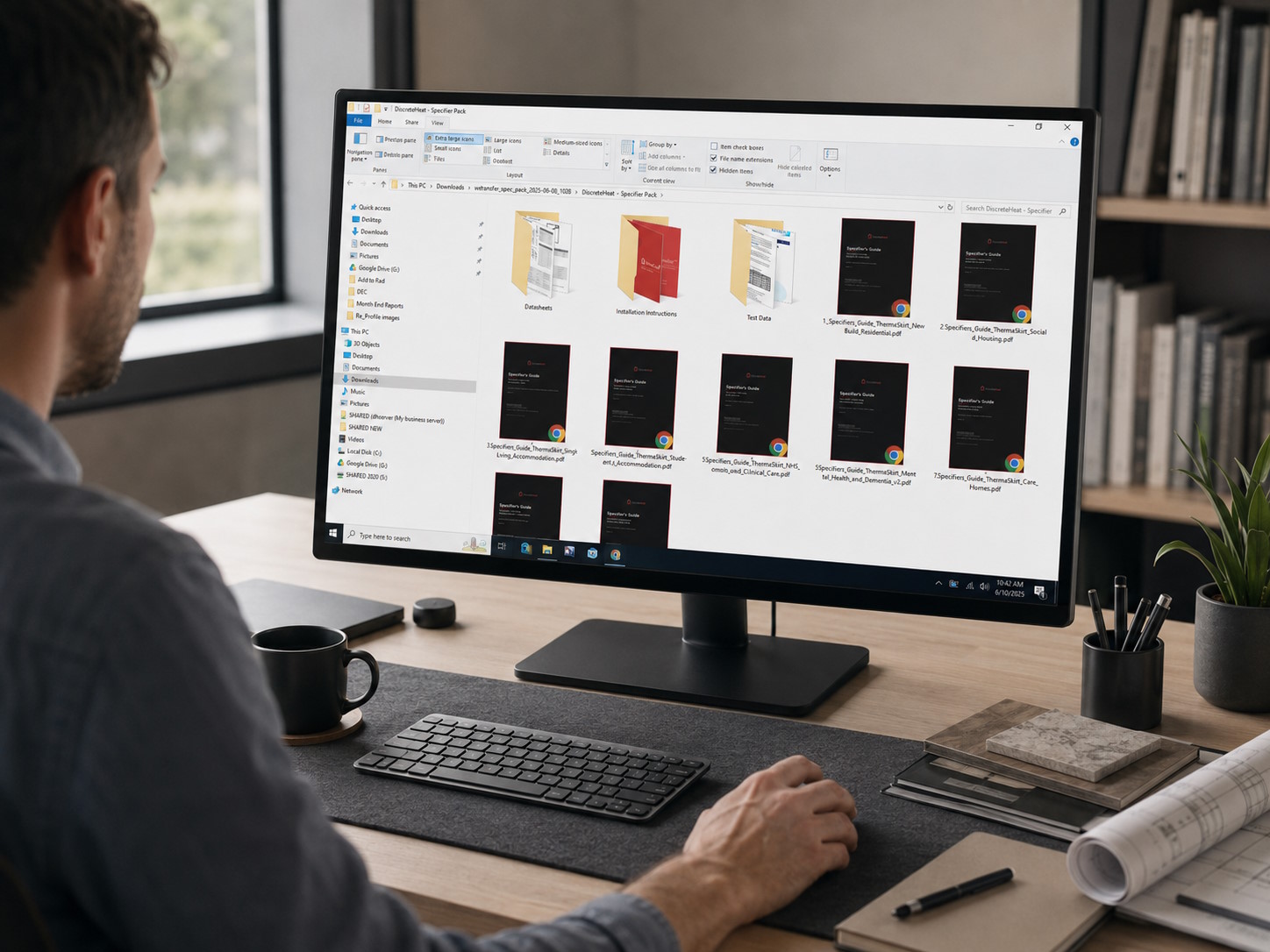
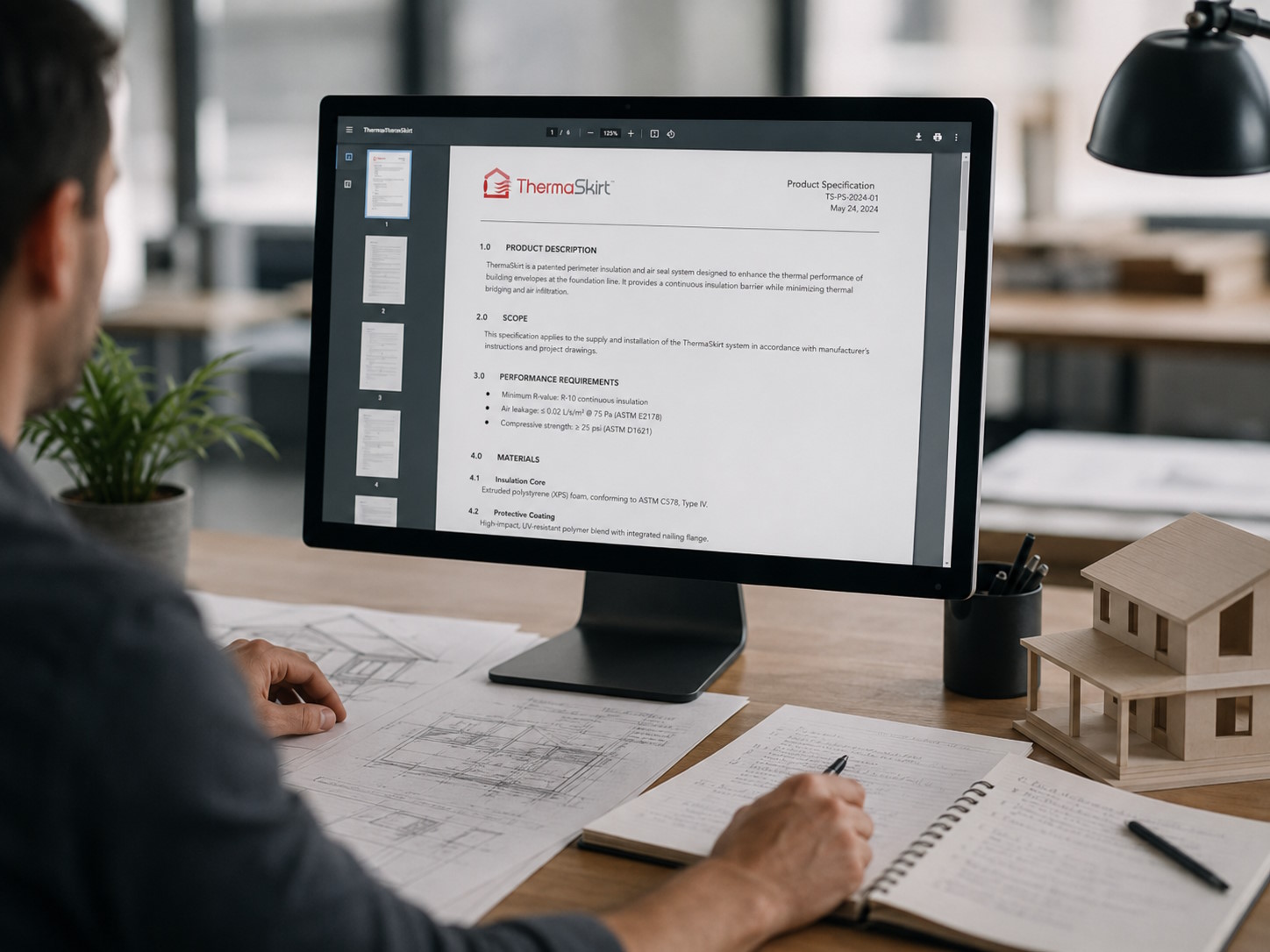
Each attendee receives an individual CIBSE-accredited digital attendance certificate by email, a PDF of the slide deck, and access to the full Specifier Pack (sector-specific design guides, product datasheets, installation instructions, BSRIA and Energy House 2 test reports, and 30+ project case studies) to support live and future specification work.

Explore Further Support

Discover our free design services and documentation.

Secure your CPD slot today.

Share your preferred dates and team size and our specification team will coordinate an in-person seminar at your UK or Ireland offices.