A bright bedroom loft conversion with ThermaSkirt mounted to the eaves
Loft Conversions

Warm the eaves, claim the walls.

Loft conversions are constrained by severely sloping roofs and incredibly tight eaves. Standard radiators dictate precisely where you put the bed, while UFH adds dangerous weight to the ceiling joists. ThermaSkirt seamlessly traces the lowest eaves, providing invisible radiant heat.

Skirting Board Heating for Loft Conversions

ThermaSkirt is the perfect low-mass heating solution for attic and loft conversions. While standard radiators consume your only full-height wall space, ThermaSkirt installs directly along the difficult 1.2m-high 'knee walls' and awkward sloped dormers, delivering swift radiant heat across the room.

Weight & Structural Issues

Zero Load on the Joists

Installing wet underfloor heating in a loft conversion is often structurally impossible. Pouring heavy concrete screed over the old ceiling joists requires extensive and expensive steelwork reinforcement from a structural engineer. Even lightweight UFH spreader plates significantly raise the floor height, diminishing your crucial floor-to-ceiling headroom.

ThermaSkirt avoids the floor entirely. It mounts to the studded perimeter walls acting exactly like a traditional skirting board. It connects straight onto the rising 15mm copper pipes connected to your existing boiler circuit, introducing negligible water volume (less than 1 litre per typical room) and virtually zero structural weight to the upper floor.
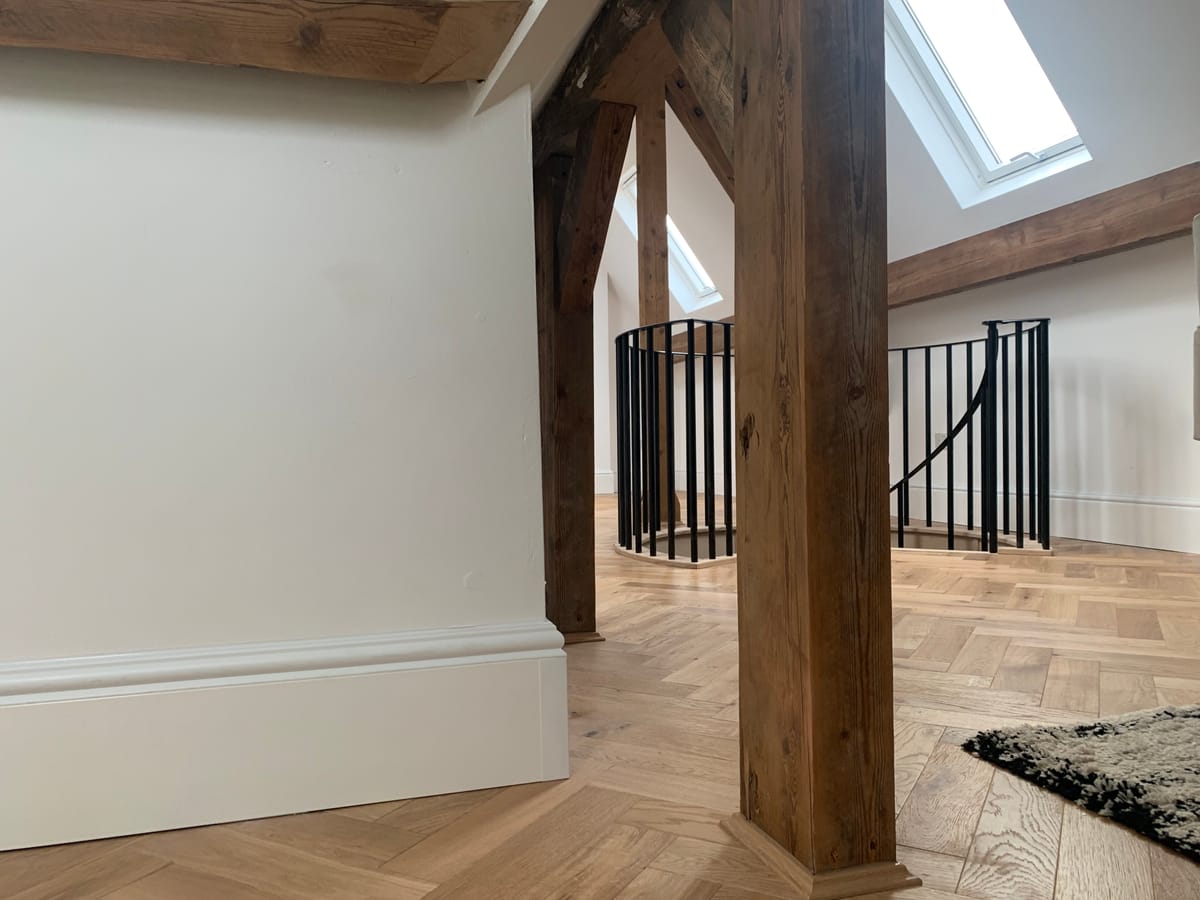
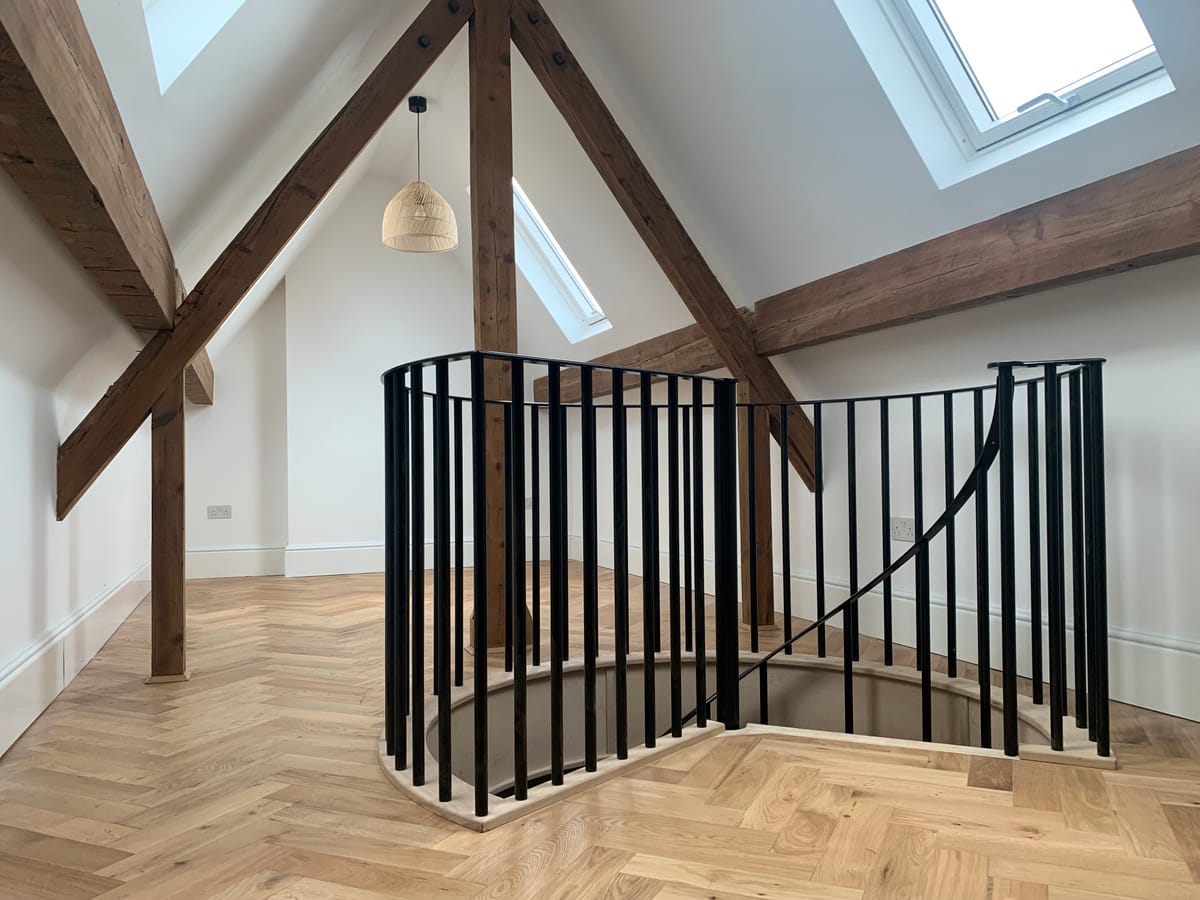
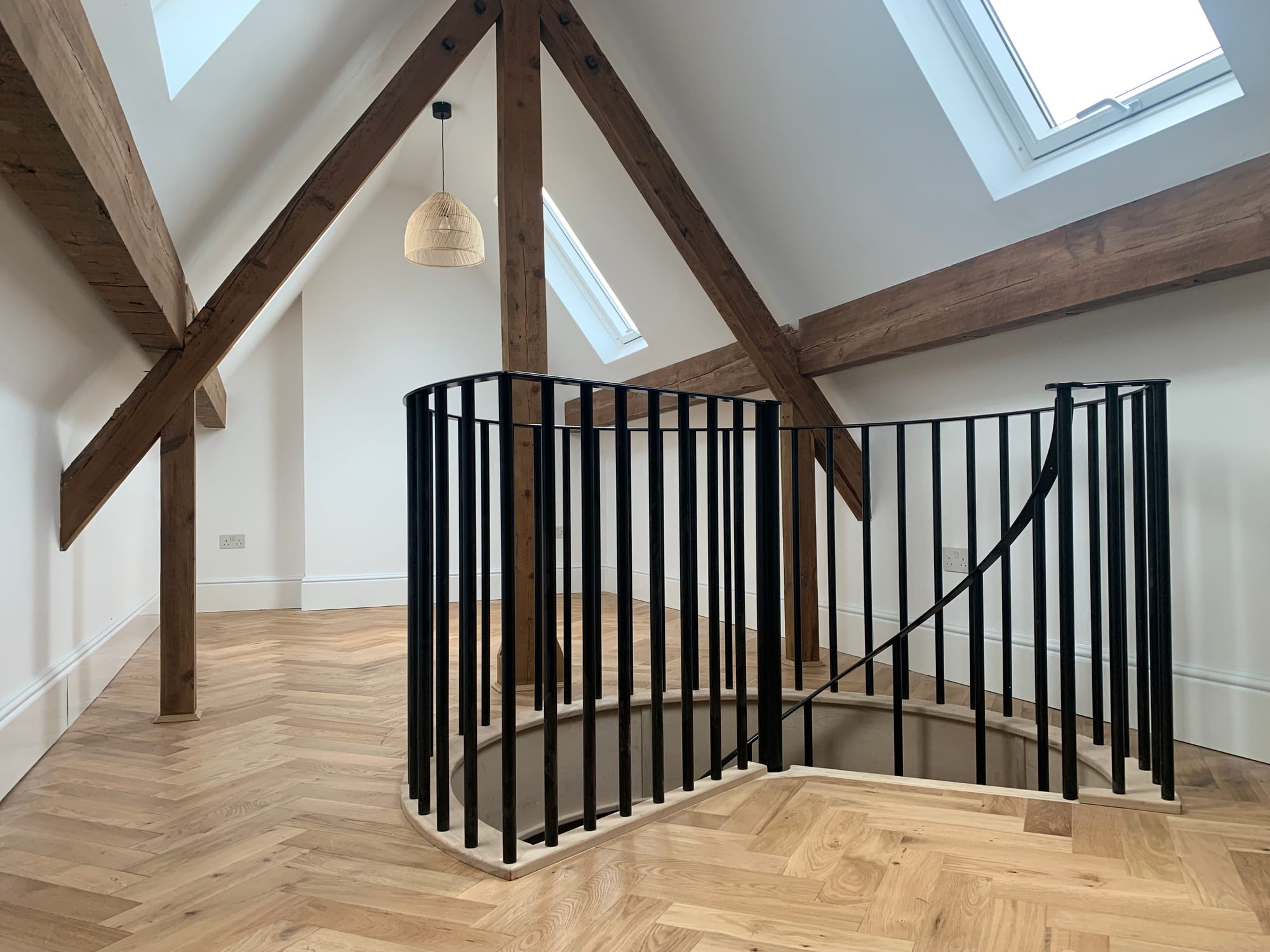
Loft conversion with exposed beam, herringbone parquet flooring, and ThermaSkirt Deco BM3 heating the upper floor space
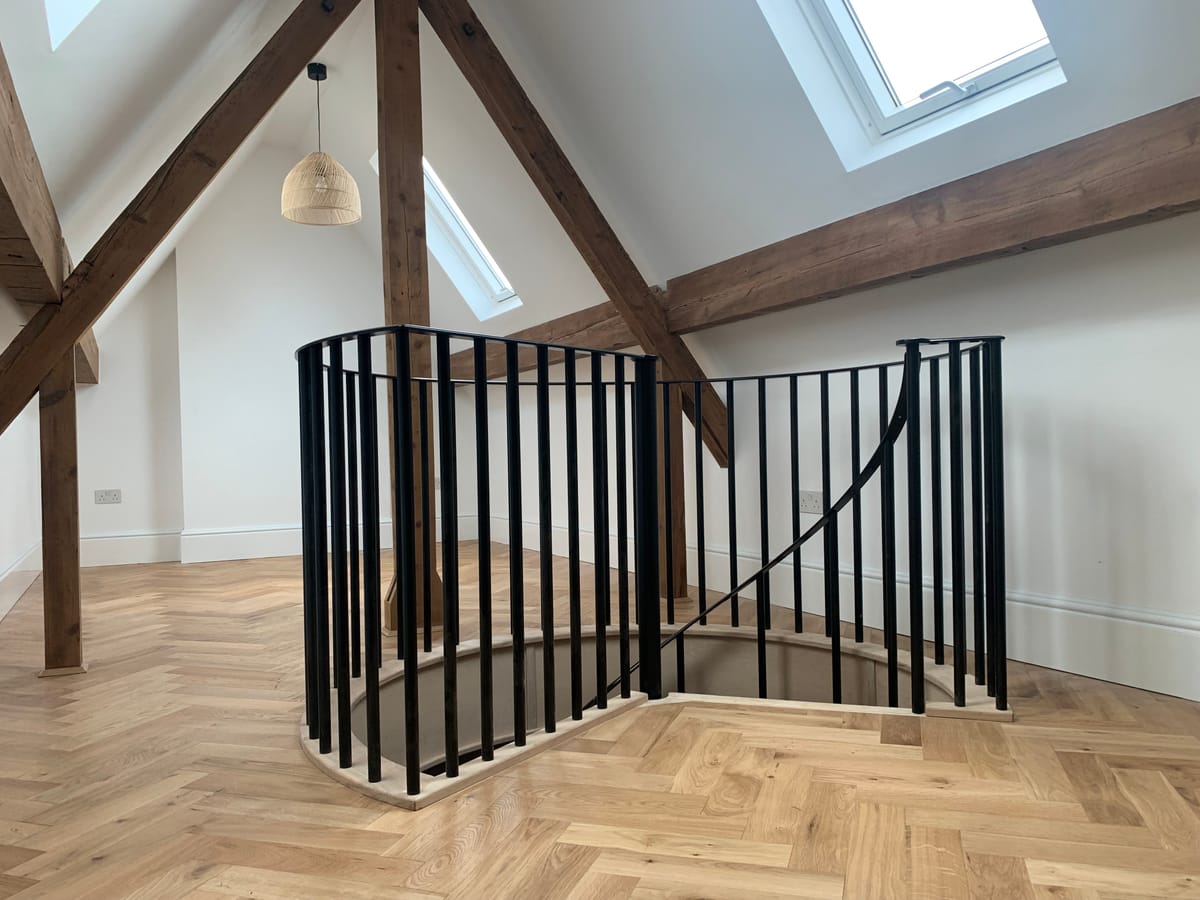
Loft landing with exposed oak roof beams, skylights, spiral staircase, and ThermaSkirt Deco BM3 along the walls
The Gable End Compromise

Stop Wasting Dormer Space

In a typical loft space, you only have one or two full-height vertical partition walls. If you mount a large double-panel radiator on that wall, you immediately block the only place capable of housing your wardrobe, your television, or your double bed's headboard.

ThermaSkirt solves the geometry puzzle of the loft. The aluminium profile easily circumvents the room, neatly framing skylights, dormer windows, and the short sloping eaves (knee walls). By shifting the heat delivery outwards to the dead perimeter space, you instantly reclaim the primary vertical walls for furniture.

"The system is quiet, no creaking or anything. It's also very safe for our toddler, no hot panels or sharp edges to worry about."

Craig CallenderUpstairs
Frequently Asked Questions

Everything you need to know

How do you install it on a sloping dormer wall?
ThermaSkirt requires just a 150mm flat vertical face at the base of the wall to mount securely via its hidden clips. Our dedicated internal and external corner covers adjust effortlessly to handle complex angles around dormer windows and stairwells.
Can I connect it to the radiators downstairs?
Yes. In a standard house extension, a plumber will typically spur off the flow and return pipes on the first-floor heating circuit, running two new 15mm pipes straight up into the stud walls of the new loft space to feed the ThermaSkirt.
Do I need a separate thermostat for the loft?
Because heat naturally rises through the house, loft spaces often get very hot very quickly. We heavily recommend fitting a thermostatic valve (TRV) directly onto the ThermaSkirt feed pipe to clamp the temperature down independently of the ground floor.
Does it work with my microbore pipework?
Yes. ThermaSkirt connects to 10mm, 15mm or 16mm pipe. On microbore (10mm) the limit is around 15m per feed on a boiler, which covers most rooms comfortably. For air source heat pump systems, check the maximum loop length with your installer.
Will it damage the new loft flooring?
No. The heat is projected horizontally outwards from the aluminium fascia, not downwards into the floor. It is perfectly safe to install above solid oak, luxury vinyl tiles (Karndean/Amtico), engineered boards, and thick carpets.
Can I hide audio or data cables behind it?
Yes. Certain profiles (like the Deco) are designed with a dedicated, isolated cable channel running across the top of the extrusion. This allows you to hide low-voltage audio cables, CAT6 ethernet, or alarm wires completely invisibly, protected away from the hot water pipes below.

Reclaim your loft's footprint.

Upload your loft floor plans for a fast, free itemised quote.

Explore ThermaSkirt by Project

From full renovations to single-room extensions, ThermaSkirt integrates into any project with minimal disruption and maximum impact.