Knowledge Base
Your questions, answered.
Whether you're researching ThermaSkirt for your home, specifying it into a project, or fitting it on site, the most asked questions are answered below across performance, installation, controls, costs and more.
Frequently Asked Questions
Everything you need to know
Jump straight to the topic you care about, or scroll through everything. If you cannot find your answer below, the technical desk is on the phone Monday to Friday.
Performance & Heat Output
Does it actually give out enough heat?
Yes. This is the most common question we receive. Because ThermaSkirt replaces the skirting board around the entire perimeter of your room, the total surface area of the aluminium is often significantly larger than the steel surface area of the single radiator it replaced. By distributing that heat across 12 to 15 linear metres, it effortlessly achieves the same total kW output as a massive Type 22 radiator, verified by independent BSRIA testing.
Is it better than a radiator?
YES. Radiators are simple to install and usually cheap to buy but they create convection currents (air movement) in order to heat a room. This can create hot spots and cold drafts that can make a room feel less comfortable. ThermaSkirt does not create significant convection currents and works by radiating the heat from all around at low level. As a result the room feels warmer at lower operating temperatures. This has been independently verified by the Building Services Research and Information Association (BSRIA) and the Swedish Institute of Climate Research.
Will it heat a large open-plan living room?
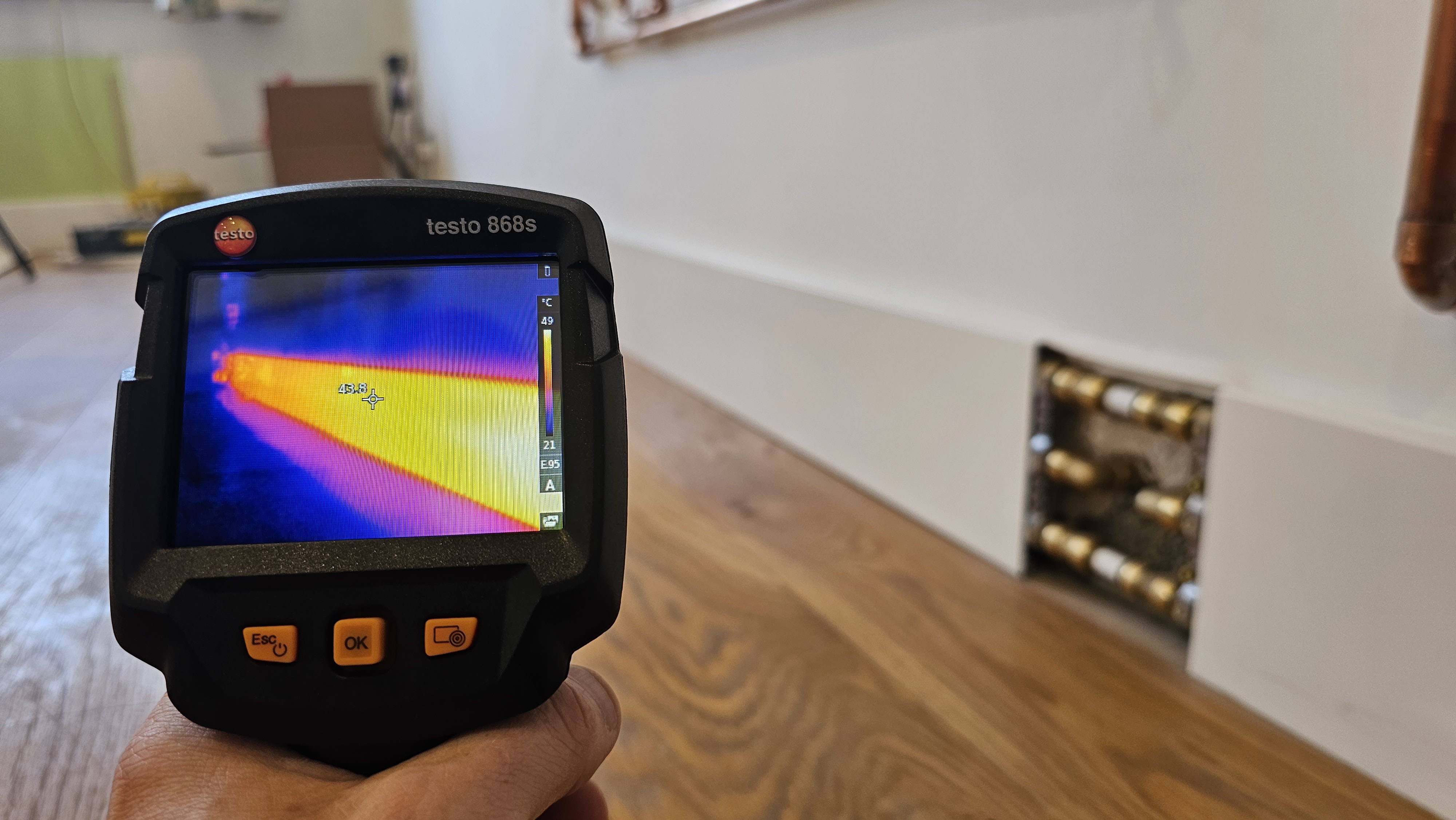
ThermaSkirt excels in large spaces. Because it runs along the entire perimeter, it provides an exceptionally even heat distribution that single point-source radiators struggle to achieve. BSRIA thermal imaging shows less than 1°C temperature variance across rooms heated with ThermaSkirt, compared to up to 5°C with standard convectors.
What is the rated output and how is it tested?
ThermaSkirt H2O is independently tested by BSRIA to BS EN 442-1. Rated output is published per metre of profile and per BM2 / BM3 height at flow temperatures from 35°C to 75°C. The headline figure for low-flow systems is ~48% retention of rated output at dT20 (~40°C flow), against ~30% for an equivalently-rated pressed-steel panel radiator. Full output tables, the BSRIA test report and EN 442-1 compliance statement are in the specifier pack.
What is the rated output per metre and how is it specified for ThermaSkirt-e?
ThermaSkirt-e is rated dynamically because of the unique heating element, with actual power consumption varying with ambient temperature. Three cable grades and 2 profile sizes cover the typical UK heat-loss range: FS30 at ~95 W/m, FS45 at ~125 W/m and FS60 at ~155 W/m. We select the grade per room against the SAP or PHPP heat-loss calculation; full output curves and selection tables are in the specifier pack.
What is the rated output for ThermaCurve?
~130 W/m on the standard variant, ~65 W/m on the LST variant. Output is specified per linear metre of profile against the room's heat-loss calculation; total perimeter run length is calculated to meet the design heat loss.
Does it really feel like underfloor heating?
Because ThermaSkirt is a continuous heat source wrapping around the perimeter at floor level, the heat radiates inward and gently rises, virtually mimicking the temperature profile of UFH. BSRIA tests show near identical comfort gradients. However, only UFH can heat the tiles beneath your bare feet if that's an important consideration.
Doesn't UnderFloor Heating save energy?
If a room needs a kilowatt of heat to stay warm, it needs that kilowatt regardless of which system delivers it. There is no inherent magic to underfloor heating. What does help underfloor is the lack of convection currents, which means a radiant system can feel as warm at a slightly lower air temperature. ThermaSkirt delivers heat in the same radiant way as underfloor heating, with the same comfort benefit, so on a like-for-like comfort basis the two systems compare very closely on energy use.
Will it cope with the heat loss from 5 metres of glass bi-folds?
Yes. ThermaSkirt emits heat very effectively. By surrounding the perimeter of the extension and utilising the kitchen island, you deliver a massive surface area of warm aluminium into the room to counteract the glazing's heat loss. Heated threshold kits are also available for door openings.
Can I put furniture against it?
Yes. Because ThermaSkirt is a primary radiant heat emitter (rather than a convector like a normal radiator), you can place sofas, beds, and cabinets directly in front of it. Radiant heat passes perfectly through the air and warms the furniture and the room. You no longer have to dictate your room layout based on where the heating is.
Energy Efficiency & Running Costs
What does ThermaSkirt cost to run?
Running costs are dependent on various factors. The size of your house, its layout and orientation, your lifestyle, the clothes you wear indoors and even if you are ill or not, all affect your comfort level and thus the energy required to keep you warm and ultimately the size of your bill. On a like for like basis, radiated heat feels warmer at around 10-15% lower operating temperatures, compared to a radiator, therefore you can lower your thermostat setting and still feel comfortable.
How much lower can I set my boiler temperature?
Most homeowners with ThermaSkirt reduce their boiler flow temperature from 70-80°C down to 50-55°C. This keeps the boiler in condensing mode, recovering waste heat from the flue gases. The result is up to 20% lower gas bills without any loss of comfort.
Will it make my boiler work harder?
No, the opposite. The total water volume inside a ThermaSkirt system is substantially lower than standard radiators. The aluminium profile heats up incredibly fast, meaning your boiler spends less time burning gas to warm up the water circuit. And because you can lower the flow temperature, the boiler condenses more efficiently.
How much electricity does ThermaSkirt-e use?
Electric heating is 100% efficient at point of use - every watt drawn is converted to heat. ThermaSkirt-e is available at various power outputs per linear metre, sized to match your room's precise heat loss calculation. The thermostat modulates power draw, so you only pay to maintain your target temperature, not to overheat the room.
How much does it cost to run compared to gas?
On a flat single-rate tariff (~30p/kWh), electric heating is more expensive per unit than gas. But almost nobody running ThermaSkirt e is paying flat rate: Economy 7 and time-of-use tariffs drop to 5-15p/kWh off-peak, and solar PV makes daytime heating effectively free. ThermaSkirt e also has a power-modulating PCB that runs at 50% power when hovering near setpoint, so average consumption is lower than rated wattage. For a well-insulated room on off-peak electricity, running costs can be close to (or lower than) gas.
Is it cheaper to run than storage heaters?
On a like-for-like tariff, ThermaSkirt-e is more energy-efficient because it uses radiant heat (heating objects directly) rather than pure convection. It also gives you precise room-by-room temperature control, so you only heat occupied rooms. Combined with off-peak tariffs or solar PV, running costs can be significantly lower than storage heaters.
Does it work on Economy 7 or time-of-use tariffs?
Yes, and it's designed for them. Infrared warmth is retained in walls, floors and furniture for hours after the heater switches off. That means you can charge the room overnight at off-peak rates and stay comfortable through peak hours without running the meter. All major time-of-use tariffs (Economy 7, Economy 10, Octopus Agile, etc.) are supported.
How does battery storage change the economics?
A 15kWh home battery charging overnight at 5.6p/kWh and discharging through ThermaSkirt-e during the day delivers an effective heating cost below 13.6p/kWh, cheaper than gas at current rates.
How efficient is ThermaCurve?
100% efficient at the point of use, every watt of electricity becomes heat in the room. With the optional Eco-Start PCB controller it ramps up gently over the first five minutes, then spends most of its time hovering at half-power or off rather than flipping fully on and off. In tests, Eco-Start kept the system in half-power or off for 80% of the programmed run time, while holding the room at 21°C.
How efficient is EasyClean compared with LST radiators?
Typically 8~13% better than a standard LST radiator on a gas-boiler circuit, and up to 25% better when paired with a heat pump or other low-flow-temperature renewable. That's because of the larger radiant surface area and the way EasyClean holds output at lower flow temperatures.
What flow temperature do you recommend?
Our engineers typically schedule ASHP systems to target a maximum flow temperature of 45°C at deep winter design (-2 or -3°C outside). This guarantees a high seasonal CoP while keeping the required active perimeter length reasonable.
Cost & Buying
How much does ThermaSkirt cost?
A typical room works out at £500 to £1,000 depending on size and heat demand, which puts ThermaSkirt in a similar bracket to mid-to-high-end designer radiators. The quickest way to get an accurate number for your home is to upload a floorplan or sketch via our quote form. We'll come back with a room-by-room breakdown, heat loss calculation and a firm price, all free and with no obligation.
How do I get an exact price for my house?
The easiest way is to use our Free Quote service. Upload a rough sketch or structural floor plan of your rooms, including wall lengths and window positions. Our engineers will calculate the required heat loss, plot the exact profiles and corners needed, and email you a precise, itemized parts manifest within 48 hours.
Do you offer supply-and-fit packages?
DiscreteHeat primarily manufactures and supplies the kits directly to homeowners or the trade. We do not employ in-house fitters, but we maintain a vast national network of Registered Installers whom we can introduce you to for the labor portion of the quote.
How do you vet the Registered Installers?
We ask all prospective installers for copies of their relevant trade qualifications and proof of valid public liability insurance before they are accepted onto the programme. They must then successfully complete our hands-on technical training at our Manchester facility.
Heat Sources & System Compatibility
Can ThermaSkirt connect to my existing heating system?
Yes! ThermaSkirt can be fitted to any system that provides warm water - gas, oil, electric, biomass or heat pump. If you have an existing central heating system it can be retrofitted with ThermaSkirt, one room at a time if necessary. If you are extending your property consider if your existing boiler is sufficiently sized to heat the extra space created.
Will it work with a heat pump?
Yes. It's built for low-temperature systems. The large surface area means it keeps around 48% of its output at dT20, nearly double what a typical radiator manages, so you don't need oversized panels on your walls. Many hundreds of properties on Heat Pumps have successfully installed ThermaSkirt : even some of the Uks biggest housebuilders
Does it work with Ground Source Heat Pumps (GSHP)?
Yes. The thermodynamic principles are identical. Whether air-source or ground-source, the critical factor is flow temperature. ThermaSkirt is optimised for the dT20-dT30 range that ground source systems typically deliver.
What boiler can I use?
ThermaSkirt will work with any heat source that provides hot water for central heating. This includes Gas (mains/calor, combi, condensing and system types) Oil, Electric Immersion and renewable such as Wood and Biomass, Solar thermal and Heat Pumps (Ground and air source). The large, all-around surface area of ThermaSkirt means that retro fitting renewable technologies is a practical possibility, and being above ground can use bi-valent heating solutions such as heat pump with oil back-up as it can operate as low as 35°C and as high as 75°C without damage.
Does it work with older open-vented (header tank) boilers?
Yes. Providing your system is clean and has been dosed with a central heating inhibitor, ThermaSkirt works on both sealed pressurised systems (combi boilers) and traditional gravity-fed open-vented systems with a header tank in the loft.
Does it work with oil boilers?
Yes. Oil boilers typically operate at higher flow temperatures (65-80°C), which means ThermaSkirt delivers even greater output per metre. The installation is identical to a gas boiler setup, standard flow and return connections using compression fittings.
Is it compatible with pellet boilers as well as log gasification?
Yes. ThermaSkirt works with any biomass boiler type - wood pellet, log gasification, wood chip, or multi-fuel. The connection is standard wet central heating (flow and return), regardless of the fuel source.
Can it handle the pressure from a large buffer tank system?
Yes. ThermaSkirt operates seamlessly on the high-pressure sealed systems associated with modern biomass accumulators and thermal stores. Standard 15mm compression connections are all that's needed.
Does it need a blending valve like underfloor heating?
No. Unlike screeded UFH which cracks if exposed to water above 50°C, ThermaSkirt is manufactured from solid aluminium and handles 80°C+ water effortlessly. You do not need thermostatic blending valves or secondary circulation pumps.
Can it work alongside a wood-burning stove?
Yes. Many biomass homeowners have a log burner in the main living area and ThermaSkirt in the bedrooms, hallways, and secondary rooms, all fed from the same biomass boiler and buffer tank. The systems coexist perfectly.
How about renewables such as Air & Ground Source Heat Pumps & Solar Thermal?
Yes. As long as the heat source can deliver warm water and the property's heat loss is appropriate for low-temperature renewables, ThermaSkirt works as well as underfloor heating. The taller Deco BM3 profile is typically used on ground floors where heat demand is highest; the standard Deco BM2 is usually adequate for bedrooms and upper floors, especially in newer builds with better insulation. Heat-loss calculation is the critical step before committing to a renewable system, particularly on a refurbishment where the building fabric may not yet match the demands of an air or ground-source heat pump.
Yes but doesn't UnderFloor Heating use water at a lower temperature?
It does, but the water typically arrives at 35-45 degrees C only because cold water has been blended in with already-pre-heated water from the boiler. Unless the system uses an expensive split-circuit boiler, the heating water still has to be raised to 65-70 degrees C first to match the demand for domestic hot water. In practice, a typical ThermaSkirt room contains between a third and a half of the water volume of the same room run on underfloor heating, which gives faster response times and finer-grained control.
Can ThermaSkirt integrate with a thermal store or accumulator?
Yes. ThermaSkirt H2O works exceptionally well connected to the low-temperature heating loop on a buffer tank or thermal store, drawing solar-warmed water at 35-45°C and distributing it effectively around the room perimeter.
Is solar thermal heating practical in the UK?
In the shoulder months (March-May, September-November), solar thermal evacuated tubes routinely produce 35-45°C buffer tank temperatures on bright days. Combined with ThermaSkirt's low-temperature efficiency, this is enough to heat well-insulated rooms without firing the boiler. In deep winter (December-February), you'll still need a boiler or heat pump as backup.
Can I run it from my solar panels?
Yes. Using a smart PV diverter (like the myenergi eddi), you can configure your household wiring to automatically route excess solar electricity into ThermaSkirt-e before exporting it to the grid, effectively heating the room for free during sunny hours.
Which PV diverter works with ThermaSkirt-e?
Any smart PV diverter that can switch a 240V load will work. The myenergi eddi is the most popular choice among ThermaSkirt-e customers, but any comparable device (iBoost, Solar iBoost+) will function identically.
Can I keep some radiators and add ThermaSkirt in other rooms?
Yes. ThermaSkirt coexists with radiators and towel rails on the same heating circuit. Many homeowners keep bathroom towel rails and replace wall-mounted radiators with ThermaSkirt in living areas and bedrooms where wall space matters most.
I live in a hard water area is ThermaSkirt OK for me?
Hard water or limescale poses little threat to sealed systems (i.e. re-circulates the water) as the mineral levels should remain steady. Open systems (i.e. with a header tank) may cause furring up over a long period. In either case, a simple limescale inhibitor, suitable for aluminium systems is recommended. Central heating systems should not be filled with chemically treated or softened water.
Is there anything special about the water in the system?
ThermaSkirt uses aluminium, so the central heating water must be correctly inhibited and kept at a pH between 6.8 and 8.3, which is the same range recommended for most modern boiler systems. Base-exchanged softened water isn't suitable. Your installer will handle this as part of normal commissioning, and we supply full guidance.
Is ThermaSkirt eligible for the Boiler Upgrade Scheme (BUS)?
ThermaSkirt itself isn't what the BUS grant covers - the grant (£7,500) pays for the heat pump. However, ThermaSkirt is the emitter system that makes your heat pump work efficiently at 35-45°C. Without appropriate low-temperature emitters, your heat pump won't deliver the efficiency the grant scheme intents.
Electric vs Wet (Hydronic)
Is the Electric version cheaper than the Wet (H2O) version?
The material cost for ThermaSkirt E (Electric) is usually more expensive per metre. However, the installation cost is frequently lower, as wiring a fused spur is often faster and less intrusive than running new central heating pipework across a home.
Can it be specified alongside the H2O wet system?
Yes. Because the BMe and BM profile families share dimensions, top-cap finishes and RAL options, the wet and electric profiles read identically from the room side. A common spec on phased retrofits is wet ThermaSkirt H2O on the heated rooms served by the central plant, with ThermaSkirt-e on rooms or extensions outside the wet circuit (loft, annex, garden room).
Can I use the wet version instead (garden room)?
Yes. If your garden room is close enough to the main house to run insulated flow and return pipes, ThermaSkirt H2O connects to your existing boiler or heat pump circuit. It delivers BSRIA-certified comfort with less than 1°C temperature variance and benefits from your existing heating schedule.
Vs Other Skirting Heaters
Skirting Radiators have been around for years why is ThermaSkirt any different?
Radiators at skirting level (or baseboard heaters) have been around for quite a while but they are nothing like ThermaSkirt. They use convection (air movement) and so have slots, grilles and fins inside just like a radiator does. This makes them bulky and quite ugly as they look nothing like skirting.
Don't these baseboard heaters produce more heat per metre?
True, so after the 1st 3 meters what are you going to do with the rest of the room? ThermaSkirt is discrete enough to skirt your room unobtrusively. You would not want more than a meter of baseboard heater in your room because of their size and appearance.
If baseboard heaters put out more heat per metre aren't they more efficient?
No. Heat output in a wet (or hydronic) heating system is a direct result of the temperature of the water and the surface area heated. Baseboard heaters produce more watts per m due to their internal fins and grilles. ThermaSkirt evenly distributes the same heat energy all around the room like Under Floor Heating and does not create the air currents, hot spots and cold spots that conventional baseboard radiators do. As a result you feel more comfortable at a lower room temperature.
Don't some Skirting heaters have a separate front panel to keep the surface cool?
Yes, they have slots top and bottom to allow air to pass through them over a series of fins or grilles. They rely on air movement (convection) to distribute the heat. Unfortunately they also distribute the dust and eventually get clogged with cobwebs and dirt and can stain your walls. ThermaSkirt can be wiped clean with a cloth, just like your existing skirting boards.
Is it better than a standard panel heater (ThermaCurve)?
For the spaces ThermaCurve is built for, yes. Panel heaters take up a full stretch of clear wall, concentrate their heat in one place, and rely on a thermal fuse to stop themselves overheating if covered. ThermaCurve sits out of the way, spreads radiant heat across the whole length of the wall, and uses a self-regulating Fire Sure cable that physically can't overheat.
Is it better than electric underfloor heating (ThermaCurve)?
They do similar jobs but react differently. Electric UFH is hidden and lovely to walk on, but it's slow to respond, held back by thick rugs or heavy furniture, and a nightmare to retrofit without lifting the floor. ThermaCurve installs in a day without touching the floor, responds in minutes rather than hours, and cools quickly when the room gets too warm.
Is it better than a ceiling radiant panel?
For most home rooms, yes. Ceiling panels project heat directly downward onto whoever's beneath them, which many people find oppressive and which can trigger distress in children and anyone with sensory sensitivity. ThermaCurve fixes to the top of the wall with conventional plugs and screws and projects its warmth outward into the room rather than down at you.
Is it better than electric plinth fan heaters?
Significantly. Electric plinth fans rely on convection (noisy, dusty, expensive). ThermaSkirt provides silent, radiant heat connected to your central heating, with no electricity consumption beyond the boiler or heat pump that is running regardless. It also distributes heat evenly rather than blasting a concentrated stream at ankle height.
Installation & Fitting
Who can fit it?
DiscreteHeat have a growing list of authorised ThermaSkirt distributors and installers; so call us to see if there is one near you. If not, a competent and recommended-by-friend plumber or joiner can install. Boilers and other gas heating equipment need to be fitted by a Gas Safe (formerly CORGI) registered installer; pipework and radiators do not.
Is it a DIY job?
It certainly can be. If you are not happy to do the plumbing side of things, get a plumber to put your pipes in for you. Download the templates for them to install them in the right place. You can design online which will give you the cut lengths and you can decide where the best pipe positions are.
How easy is it to fit ThermaSkirt?
If you download the pipe and fitting templates, it will make your job a lot easier. It's more involved than a radiator, but simpler than skirting as there is no mitering, butt and scribing or filling and caulking. When it's finished you will be pleasantly surprised not just how it performs, but also how it looks.
How long does installation take?
A typical room can be completed in half a day by a qualified installer, or a day by most DIYers. A full house install usually takes 2 to 3 days depending on the number of rooms.
Do I need an electrician to install ThermaSkirt e?
Yes, for the supply side. A qualified electrician needs to run a 220-240V switched fused spur to each room (usually via a dedicated ring main like any electric heating system) and fit a Type C 30mA RCBO. Once that's in place, the skirting itself can be fitted by a competent DIYer using our instructions and install videos, or by any tradesperson. There's no plumbing work at any stage.
Does installing it myself void the product warranty?
No. DiscreteHeat maintains the manufacturing warranty on the aluminium profiles and components regardless of who installs them. However, we do not warranty faults with the installation such as the standard of finish, damage to components, or issues as a result of not following the provided instructions.
Can I cut the profiles with an angle grinder?
Not recommended. An angle grinder will overheat the aluminium, melt the factory paint finish, and create an incredibly jagged cut that will not fit inside the connection covers. You must use a sliding compound mitre saw with a negative-rake aluminium blade.
What about the walls?
ThermaSkirt can be fitted to brick and blockwork walls, timber studding and partitioning, new or existing build. Like a skirting board, you will need a good fixing so check your walls are sound, or you can identify where the studs are. ThermaSkirt can accept a certain amount of flex along its length if the wall isn't straight, but at corners and intersections, the corner covers require a good vertical alignment.
Will it affect my floors?
ThermaSkirt is above ground so is unaffected by and will not affect your final floor covering, such as timber, carpet, laminate or vinyl. Bear in mind the thickness of your likely final floor covering if it's not already down. You can install ThermaSkirt at the right height to allow for it and save you the job of trimming the bottom (removable) cover.
Will it damage my wooden floors or carpets?
No. The heat is projected horizontally outwards into the room from the aluminium fascia, not downwards into the floor. It is perfectly safe to install ThermaSkirt directly above solid oak flooring, luxury vinyl tiles (Karndean/Amtico), and thick carpets without any risk of warping, shrinking, or heat damage.
Should I install the flooring or the ThermaSkirt first?
Hardwood / LVT / Laminate: The flooring must go down first. The ThermaSkirt is then installed on top of the finished floor. Carpet: The ThermaSkirt goes on the wall first. We advise setting it approximately 5mm off the floor boards. The carpet fitters then lay their grippers and tuck the carpet neatly underneath the ThermaSkirt profile, just as they would with a traditional timber skirting board.
How do I go across doorways archways and other obstacles?
We have a threshold kit that provides all the fittings needed to connect two pipes (not provided) hidden in the floor to a depth of around 50mm. This kit allows the flow and return to duck under openings such as doors and fireplaces and continue the system on the other side. We now also have an Architrave Kit that routes the flow and return up and over the doorway.
I have a room longer than 6m what do I do?
We have an in-line joining piece that allows two lengths of ThermaSkirt to be joined end to end for walls over 6m. A simple cover hides the joint. If designing online, any lengths greater than 6m are automatically divided by the computer program into 2 equal halves, so any join is in the middle.
Can I connect it on the same pipework as my towel rail?
Absolutely. Many installers tee off the existing flow and return pipes. They run one pipe run to the ThermaSkirt to provide the necessary room kW output, and a separate branch to the towel ladder rail to keep towels warm.
Does it work with my microbore pipework?
Yes. ThermaSkirt connects to 10mm, 15mm or 16mm pipe. On microbore (10mm) the limit is around 15m per feed on a boiler, which covers most rooms comfortably. For air source heat pump systems, check the maximum loop length with your installer or supplier as the lower flow temperatures may require a shorter run. For ASHPs’ check with your installer or supplier as you may need to upgrade your 10mm pipes for optimum efficiency.
Do I have to re-pipe my entire house?
No. ThermaSkirt is designed to work as a straight swap for existing radiators. Your installer will simply pick up the existing 15mm or 10mm microbore pipework protruding from the floor or wall where your old radiator sat, and run it directly into the skirting board profile.
How do I bleed a system that has NO conventional radiators?
If it's a new installation, then ThermaSkirt may be the only heat emitter in the property and no conventional radiators will be present to act as reservoirs. In this instance a bleed-off tee piece will provide a convenient and simple solution. At the highest point in the central heating circuit, Tee off into a vertical pipe, copper or plastic, and install an air release valve at 600mm or more above floor level.
What about air in the system?
ThermaSkirt is effectively a pipe so air should not normally get trapped in it. Existing central heating systems, to which ThermaSkirt is retrofitted, may be more susceptible to getting air trapped in them, because previously the conventional radiator provided a convenient reservoir for the air. If the ThermaSkirt is not getting warm, then you may have air trapped in the system somewhere. The return manifold at the end of a ThermaSkirt run has a bleed screw, to assist trapped air in the pipework to get moving.
Does it need bleeding or ongoing maintenance?
No. Because ThermaSkirt's pipework runs horizontally (like underfloor heating), air doesn't collect in it the way it does in vertical radiators. A bleed point is included at the end of each run for commissioning, and after that there's nothing to do.
How long does it take to install compared to UFH?
A typical whole-house ThermaSkirt installation can be completely finished by a qualified plumber in 2-3 days directly alongside second fix plumbing. UFH involves laying insulation, clipping miles of pipe, pressure testing, and then waiting weeks for a 100mm screed to fully cure before taking delivery of your floor coverings.
How is ThermaCurve installed and what fixings does it use?
Two orientations: horizontally at the junction between wall and ceiling (in the position of architectural coving), or vertically tucked into the corner between two walls from FFL to ceiling. Adjustable wall brackets take the profile via conventional plug-and-screw fixings into the finished wall. No ceiling void access is required and no structural ceiling strengthening is involved.
Can ThermaSkirt be installed while tenants are in situ?
Yes. ThermaSkirt installation is rapid. In most properties, an entire room can be retrofitted in 1-2 hours without ripping up screed or flooring. This significantly reduces displacement costs and tenant disruption.
Can I wire cables behind it?
Yes. Certain ThermaSkirt profiles (like the Deco) are designed with a dedicated, isolated cable channel running across the top boundary of the extrusion. This allows you to hide low-voltage audio cables, CAT6 ethernet data cables, or alarm wires completely invisibly, protected away from the hot water pipes below.
Aesthetics & Design
Does ThermaSkirt look like a real skirting board?
Yes. Our profiles, such as Deco (BM2 & 3) with the optional Torus capping, are designed to perfectly mimic traditional timber skirting boards. Once painted or finished in Cricket White (RAL 9010) or Vintage Ivory (RAL 1013), they blend seamlessly into the room's architecture. Matching MDF profiles are supplied for non-heated sections so the look is consistent throughout.
Can it be painted?
Yes. ThermaSkirt is delivered from the factory in a highly durable, brilliant white epoxy powder-coated finish. However, if you wish to match a specific Farrow & Ball or heritage colour, simply rub the factory finish down lightly with fine wire wool to create a key, and paint over it using any high-quality oil-based or water-based trim/satinwood paint.
What colours is it available in?
ThermaSkirt comes pre-finished in a tough double epoxy powder coat. Standard colours are Cricket White (RAL 9010) and Vintage Ivory (RAL 1013). Carbon Black (RAL 9011) and Anthracite Grey (RAL 7016) are available to order, and any other RAL colour can be matched for a surcharge. It can also be repainted with standard radiator paint if you redecorate.
What profile heights depths and finishes are available?
Two profile heights: BM2 at 114mm and BM3 at 170mm, both at 20mm depth. Top-cap finishes: square (uncapped), traditional torus, and softer ovolo. Standard powder-coat finish is double epoxy in RAL 9010 Cricket White; stocked alternatives include RAL 1013 Vintage Ivory, RAL 9011 Carbon Black and RAL 7016 Anthracite Grey. Any other RAL is available to order. Matching MDF skirting in the same profile and finish is supplied for unheated runs.
Are the corners just plastic caps?
No. The external and internal corner joints are precision-molded from the exact same high-grade polymers used in automotive manufacturing. They are color-matched exactly to the aluminium extrusions and are designed to provide a seamless, robust architectural finish that will not turn yellow or fade over time.
Curved Walls and Bay Windows
ThermaSkirt can be rolled and curved to suit feature walls such as in bay windows or columns, or those found in architecturally challenging applications such as windmills, water towers and Turrets. A simple cardboard template is required and the Skirting length is shaped to suit. For hexagonal bays or conservatories, special flexible connectors are required and the corner covers are cut and formed to the appropriate angle for a perfect fit. All profiles are suitable for angled bays and non 90° corners.
How do I match original skirting heights?
ThermaSkirt profiles are available in multiple heights, typically between 120mm and 170mm. You can mount them at standard heights, or run them atop a decorative timber plinth to match towering 220mm Victorian skirting. It integrates flawlessly.
Does it fit under standard IKEA or Magnet cabinets?
Yes. ThermaSkirt profiles measure between 115mm and 150mm in height, perfectly matching standard kitchen cabinet plinth heights. Our mounting brackets clip directly onto standard cabinet legs.
Where exactly does ThermaCurve mount?
Two options: horizontally, at the junction between wall and ceiling (the way coving sits), or vertically, tucked into the corner between two walls from floor to ceiling. Both put the heater up and out of the way, free of furniture and out of reach of kicks, spills and leaning furniture.
Controls & Smart Home
Does it work with Hive Nest Tado and other smart thermostats?
Yes. Because ThermaSkirt behaves like a radiator from the control side, it works with every major smart thermostat including Hive, Nest, Tado and Drayton Wiser, as well as standard programmers. Each length comes with a small on-board TRV for room-by-room control, and you can swap those for smart TRVs if you want app-based zoning of individual rooms.
Can I zone the open plan space differently?
If you plumb the kitchen run and the living area run onto separate legs of a manifold, you can use smart TRVs (like Heatmiser, Hive, or Tado) to control the temperature of the two zones independently.
How is ThermaSkirt H2O controlled and can it interface with a BMS?
ThermaSkirt H2O behaves as a standard wet emitter from the controls side. Three typical control approaches: (1) standard manifold with room thermostats actuating zone valves; (2) concealed TRVs installed at the profile junction, hidden under the corner cover, with a wireless head per room; (3) full BMS interface controlling flow temperature centrally with weather compensation, used on larger commercial and healthcare estates.
How does Lot 20 compliance work in practice?
Since January 2018, electric local space heaters sold in the UK and EU must comply with Lot 20 of the EcoDesign Directive. ThermaSkirt-e meets the appliance-side requirements and is Lot 20 compliant when paired with any Lot 20 control set: 24/7 programming, open-window detection and adaptive-start controls. Heatmiser, Drayton Wiser, Hive, Nest and Tado all have qualifying control sets.
Health & Safety
Is it safe to the touch?
ThermaSkirt can run as hot as a conventional radiator, or as cool as underfloor heating. It's your choice. Radiators account for approximately 29,000 injuries per year (Source: RoSPA) the overwhelming majority (92%) are impact and fall related injuries, not scalds. Simply installing ThermaSkirt will reduce your risk of injury by 9/10ths.
Is it safe for children and pets?
Yes. ThermaSkirt runs at the same flow temperatures as a standard radiator, so the surface gets warm but without the large, scalding-hot panel you get with a conventional radiator, and on a heat pump running at 35 to 45°C the surface is barely more than pleasantly warm. Because it sits at floor level rather than sticking out from the wall, it also removes the sharp corners and edges that make radiators a hazard. RoSPA data shows radiators are responsible for the majority of impact injuries in under-5s and over-65s, and ThermaSkirt eliminates that risk. It's routinely specified in schools, care homes and hospitals.
Is the system genuinely anti-ligature?
Yes. The EasyClean LST profile has no fixings accessible to the patient, no gap between the wall and the emitter, and a continuous profile contour that prevents the attachment of any ligature. It is sealed with a robust, pick-proof clinical mastic.
Can it be made safe Low Surface Temperature (LST)?
Yes. We produce versions suitable for use in the NHS, Mental Health and Extra Care facilities with a maximum surface temperature of 43°C. If you have a vulnerable person, or are just a concerned parent, ask about our EasyClean system or TherMiser smart controls.
What does LST actually mean and does EasyClean qualify?
LST stands for Low Surface Temperature. In UK healthcare design the relevant standard is HBN 27, which caps the touchable surface temperature at 43°C so vulnerable patients can't be burned. EasyClean's LST option meets HBN 27 by spreading the heat output along the full perimeter of the room rather than a small, hot panel, so the front face stays under 43°C even at full output.
Is the surface temperature suitable for HBN 27 LST (electric)?
ThermaSkirt-e is available as an HBN 27 LST compatible product. The PTC element naturally limits surface temperature, but for guaranteed sub-43°C front-face compliance in clinical and care settings the appropriate spec is EasyClean LST in the electric versions..
What about Asthma & other respiratory ailments?
The Asthma Society has recognised ThermaSkirt as a suitable radiant heating solution, and ThermaSkirt is used in acute care hospitals, as well as in domestic properties with asthma sufferers. By creating little if any air convection currents, dust and other irritants are kept of the air, and the radiant heating effect avoids the dry air effect that can exacerbate respiratory conditions.
Infection Prevention and Bacterial Infection?
Conventional radiators are widely recognised to be a significant cause of the spread of infections such as MRSA and C.Difficile and COVID 19 in Healthcare environments, especially those with protective covers and grilles. As a result, the ThermaSkirt EasyClean system has been developed with the NHS.
How is EasyClean cleaned?
Exactly the same way the floor is cleaned. Because the top cap is sealed to the wall with a fluid-resistant gasket and the bottom is sealed to the floor with a coved trim, you can mop the profile at the same time as mopping the floor. No tools, no covers off, and no deep-clean team required.
Is there impact-resistance evidence?
Yes. EasyClean is impact tested against DHSS DN4. Full DN4 test reports, anti-tamper test methodologies and the secure-hospital impact data pack are available on request as part of the specifier pack.
Is there an anti-microbial finish option?
Yes. By special request for high-dependency, surgical or isolation environments, the aluminium extrusion can be powder-coated with a silver-ion antimicrobial finish.
Is it a fire risk if something covers it (electric)?
No. ThermaSkirt e uses a self-regulating heating system that physically cannot exceed its maximum operating temperature, even when fully covered. If a sofa, curtain or piece of bedding sits against it, the covered section simply reduces its own output. There's no thermal fuse to fail and no risk of ignition from paper, clothes or soft furnishings resting on top. The systems simply cools down when any obstruction is removed and re-starts automatically,
Reliability & Warranty
What goes wrong with it?
Very little. We use a specially made Viton O ring similar to that used in turbo-chargers and petrol pumps and is often better than the seals in the rest of the home's pipework and fittings. We have conducted life tests assuming 10 operations a day for 365 days a year and we have achieved an operational life of 40 years (and still counting) on the seals. The ThermaSkirt is obviously never going to leak. By comparison a standard radiator usually has a 2 year warranty.
Does it ever leak?
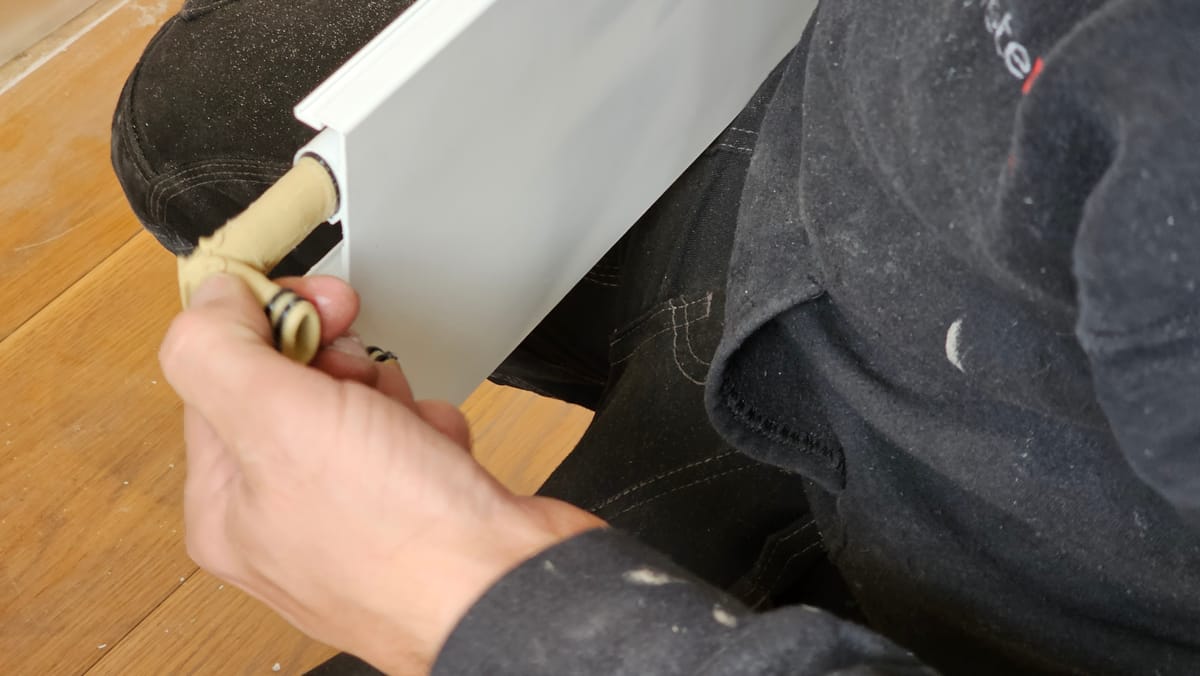
No, the only time it ever leaks is when a seal is damaged on installation. We provide many of our ThermaSkirt systems ready-de-burred and silicon lubricant sachets are included, so unless you're really clumsy you won't damage a seal when fitting. If you follow the instructions, de-burr properly and use the grease you'll have no trouble. If you make a mistake and you do nick an O ring, a spares kit is provided.
What is the warranty (H2O)?
Ten-year manufacturer warranty on the wet system, conditional on installation in line with the product specification and water dosed in accordance with BS 7593. Pre-installation system flush is recommended on existing circuits.
How long is the warranty?
ThermaSkirt H20 carries a standard 10-year warranty (extendable depending on project terms) strictly contingent upon proof of proper BS 7593 flushing and inhibitor dosing upon commissioning.
Who is responsible for the warranty?
DiscreteHeat provides a 10-year warranty covering all wet system parts and any manufacturing defects. The labour warranty, covering all installation elements, finishing details, and system performance, sits with the installer, the same as it would with a standard radiator installation. This is why we always recommend using a trained professional.
Does it need servicing (ThermaCurve)?
No. The hinged profile design means the inside is easily accessible if anything ever needs attention, but there are no consumable parts, no pipework to bleed, and no fan or moving air. In day-to-day use there's nothing to do.
Does the system rust in damp basement environments?
No. ThermaSkirt is manufactured from high-grade aerospace aluminium which cannot rust. It is finished with a hardened epoxy powder coating that perfectly withstands the knocks, bumps, and varying humidity of a basement.
Can I clean it with bathroom cleaning products?
Yes. The double epoxy powder coat finish is specifically designed to withstand aggressive cleaning products, including bleach-based bathroom cleaners. The sealed aluminium profile cannot rust or blister like painted steel radiators.
Will it stop my bathroom getting mouldy?
ThermaSkirt significantly reduces mould risk by heating the wall-floor junction, exactly where condensation first forms in bathrooms. Keeping these surfaces above dew point temperature prevents moisture from forming in the first place, which is far more effective than treating mould after it appears.
What about noise I've heard skirting heating is noisy?
Consider this; if ThermaSkirt really was noisy, it couldn't possibly be used in hospital wards, care homes, mental health units or schools and nurseries. The fact is, that if installed correctly, it does not make noise. When metal expands, it does so silently, except when it's rubbing or pushing against a hard surface. That's why we use moulded colour matched plastic covers at the joints to ensure that there is no sound when the ThermaSkirt expands behind them. Other skirting heating systems have fins and tubes that are made from aluminium and copper, which expand at different rates. As a result, they can click and tick as they heat up and cool down. ThermaSkirt is a single aluminium extrusion, and if installed correctly does not make noise.
Materials & Construction
ThermaSkirt is aluminium and does not use copper tubes - isn't that a problem?
Ask what the heat exchanger in your boiler is made from: Aluminium. Ask what the best radiators are made from: Aluminium. Ask what UFH allupex pipes are lined with: Aluminium. If not having copper lining was a problem, nearly every boiler, every aluminium radiator and every UFH system would have a problem. The use of copper lined bores or pipes is a throwback to old technology when joints were soldered. The use of plastic push-fit has revolutionised plumbing and ThermaSkirt is the only one that uses patented inert plastic push-fit fittings.
Suitability of Aluminium for Water Heating and Wet Central Heating System Applications?
Aluminium and its alloys are widely used across the water heating industry. Approximately half of the 1.5 million domestic boilers sold in the UK per annum currently have aluminium heat-exchangers. Aluminium owes its excellent corrosion resistance to the barrier oxide film that is bonded strongly to its surface. Aluminium can be prone to pitting corrosion in chloride containing environments where the solution is open to the air but this is generally not a problem with well-designed, properly flushed and maintained central heating systems.
Why does ThermaSkirt have 2 pipes?
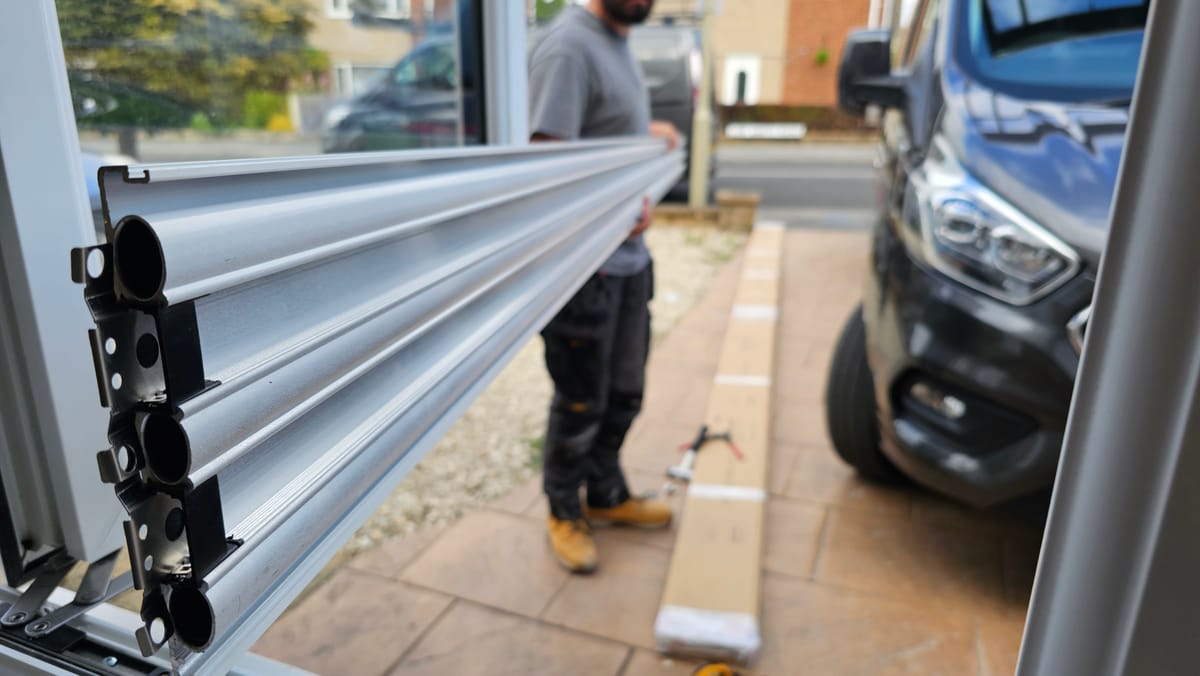
Simple: To ensure that the heat along the length is exactly the same everywhere. By encasing the feed and return pipe in the same section, the temperature is evened out between the 2 at every point along its length. This unique feature gives ThermaSkirt its under floor heating-like heat distribution pattern, and it makes installation and pipework runs easier.
Additional Resources
Explore further technical documentation and guides.
Still have questions?
Upload your floor plans. Our technical design team will review them and advise you.